

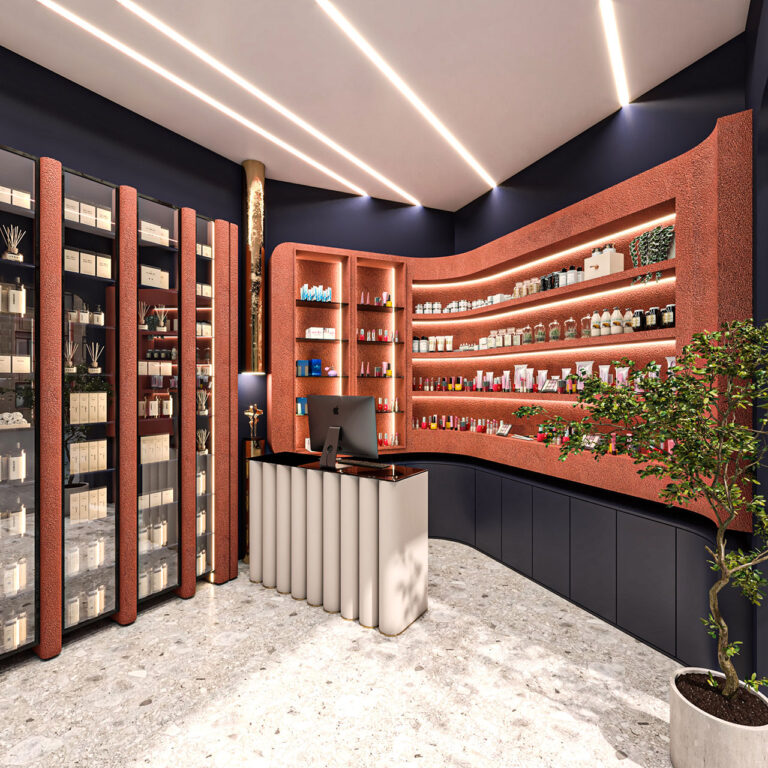
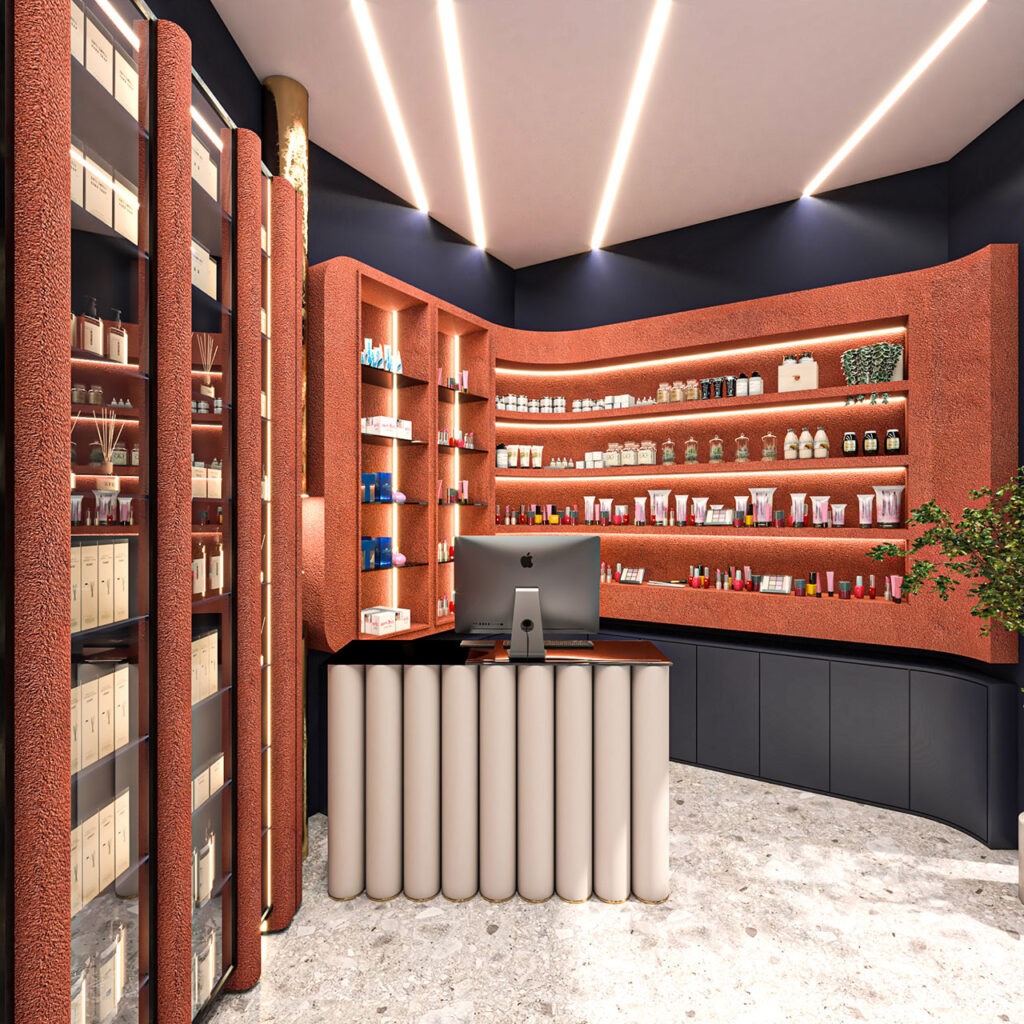
In today’s highly competitive retail environment, the design of cosmetic and personal care stores goes far beyond visual appeal. These spaces must create a sensory, smooth, and memorable experience for customers. In this context, Building Information Modeling (BIM) has become a powerful tool in commercial architecture, enabling precise design, efficient project management, and spatial optimization.
Using BIM in the design of cosmetic and personal care stores allows architecture, lighting, layout, branding, and functionality to be developed in a fully integrated and strategic manner.
1. What Is BIM and Why Is It Important in Retail Architecture?
BIM is a digital process that consolidates all physical and functional information of a project into an intelligent 3D model. In cosmetic retail design, BIM enables:
Accurate spatial planning
Seamless coordination between architecture, lighting, and building systems
Simulation of customer movement and behavior
This integrated approach significantly improves design quality and decision-making.
2. The Role of BIM in Cosmetic Store Architecture
2.1. Optimizing Floor Plans and Customer Flow
With BIM, architects can:
Analyze customer circulation paths
Identify focal points and pause zones
Strategically place high-demand products
These insights directly contribute to increased sales and a better user experience.
2.2. Professional Lighting Design
Lighting is critical in cosmetic stores. BIM allows designers to:
Simulate natural and artificial lighting
Evaluate shadows on faces and products
Select appropriate color temperatures for product testing
All lighting decisions can be validated before construction begins.
2.3. Coordinating Materials and Architectural Details
Detail precision is essential in cosmetic retail design. BIM helps to:
Ensure accurate material selection
Design shelves, display units, and counters without conflicts
Minimize clashes between architectural elements and MEP systems
2.4. Spatial Branding and Visual Identity
BIM enables designers to:
Integrate brand colors, logos, and graphic elements into the space
Experience the brand identity in a three-dimensional environment
Assess harmony between interior architecture and brand messaging
3. Economic Benefits of Using BIM in Commercial Projects
Implementing BIM in cosmetic and personal care store design results in:
Reduced construction errors
Time and cost savings
Accurate budget forecasting
Higher overall project quality
These benefits are especially valuable for investors and retail brands.
4. Challenges and Considerations
Despite its advantages, BIM:
Requires skilled and specialized teams
Demands strong coordination among design disciplines
May increase early-stage design time
However, for high-impact commercial projects, these challenges are well justified.
Conclusion: future of retail architecture
The commercial design of cosmetic and personal care stores using BIM represents the future of retail architecture. This approach empowers architects to create spaces that are visually compelling, operationally efficient, and deeply aligned with user experience—while significantly reducing execution risks.
In this direction, Ribo Architecture Studio leverages BIM technology, a human-centered design approach, and meticulous attention to architectural detail to deliver intelligent and impactful commercial projects. By combining creativity, customer behavior analysis, and contemporary architecture, the Ribo team creates retail environments that strengthen brand identity and provide lasting, professional experiences for users.
No comments yet.