

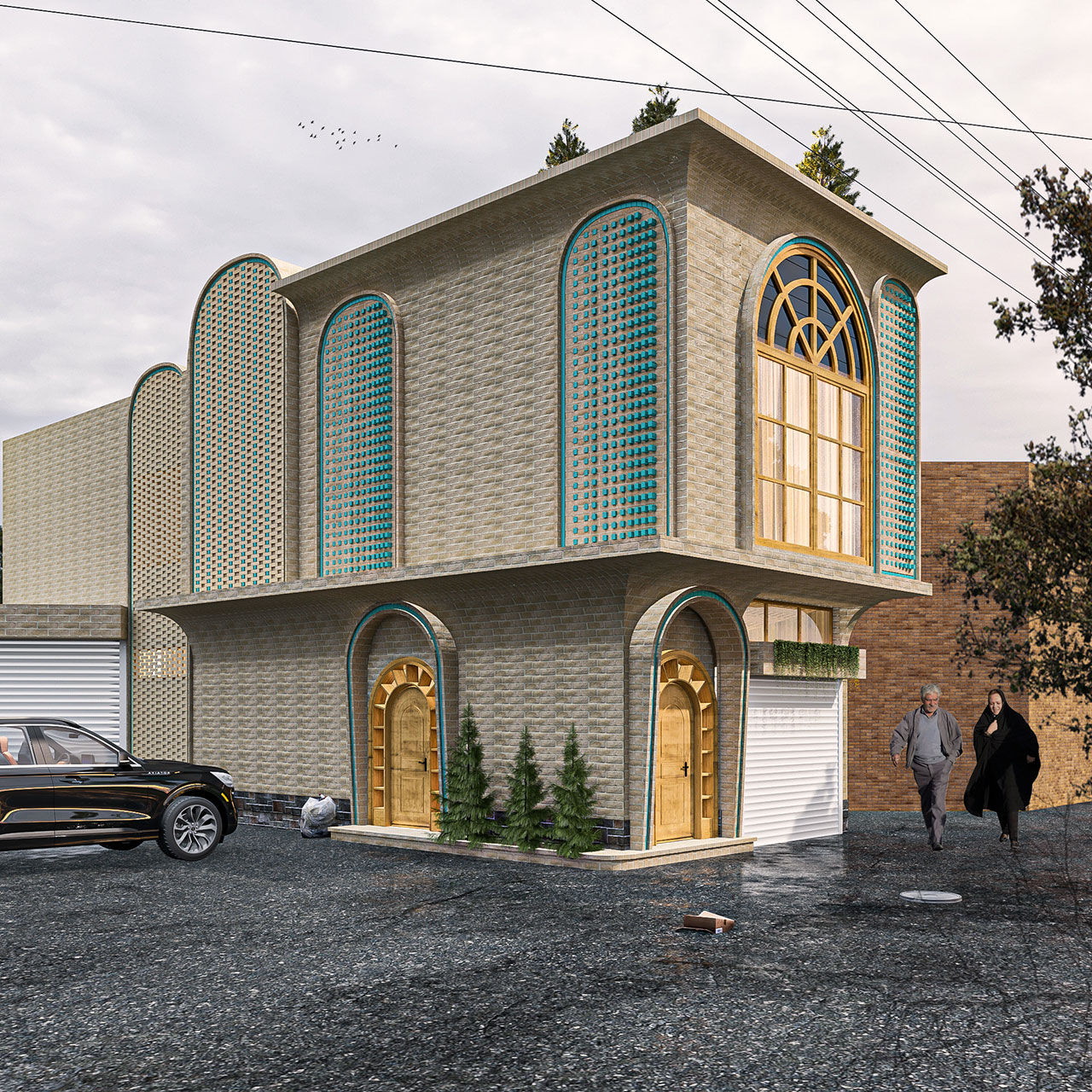
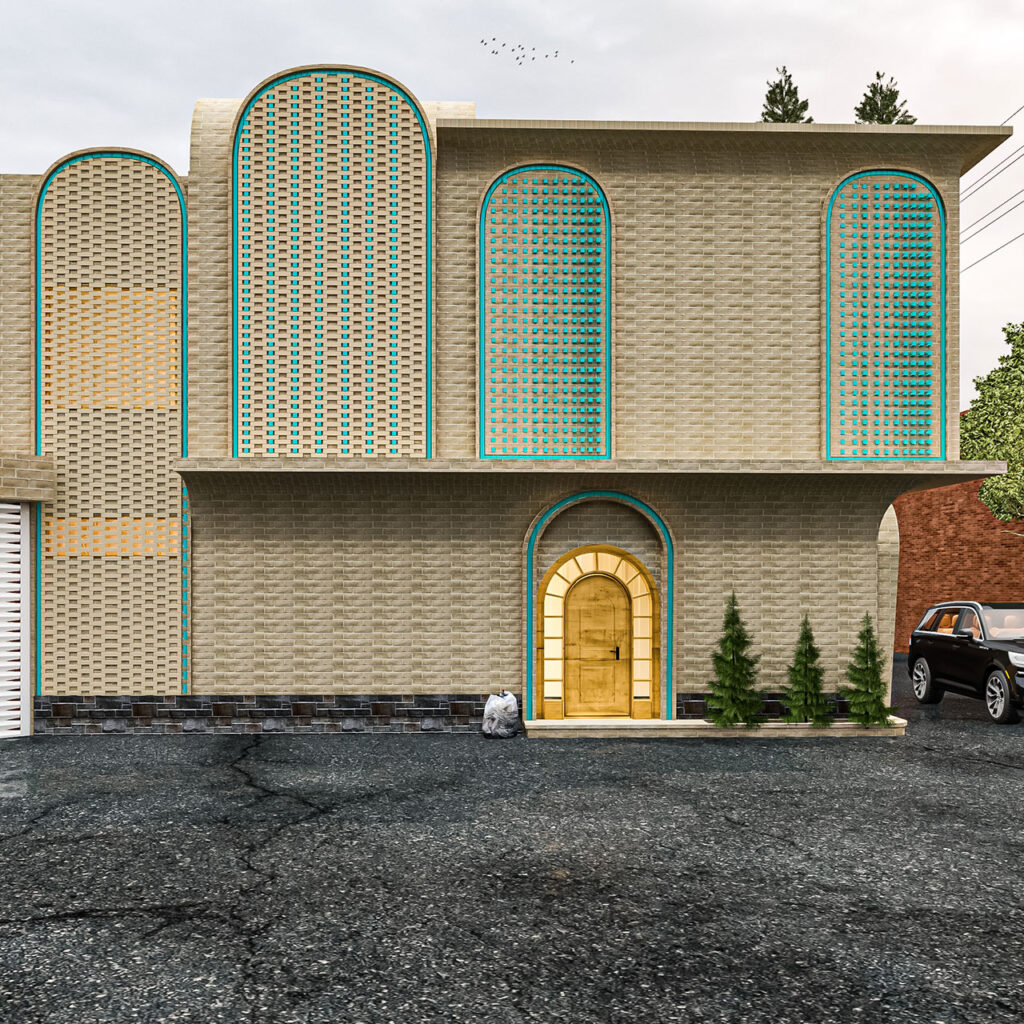
Designing architecture within a historic urban fabric requires more than visual sensitivity—it demands cultural awareness, contextual intelligence, and architectural restraint. The façade of a building is not merely an outer layer; it is a mediator between private life and collective memory. This project, a two-story residential building façade designed with an Iranian architectural approach in a historic context, explores how contemporary architecture can engage with tradition without resorting to imitation.
Developed by Ribo Architecture Studio, the project seeks to establish a meaningful dialogue between past and present through proportion, materiality, and spatial depth.
1. The Challenge of Building in a Historic Context
Historic urban fabrics are defined by continuity. Human scale, rhythmic façades, muted material palettes, and carefully controlled heights shape their identity. Any new architectural intervention must respond to these qualities while meeting contemporary functional and technical requirements.
The primary challenge of this project was to design a façade that respects the existing context while expressing a modern architectural language rooted in Iranian principles.
2. Conceptual Approach: Reinterpreting Iranian Architecture
Rather than replicating historical forms, the design adopts a reinterpretative approach to Iranian architecture. Core architectural concepts—such as introversion, hierarchy, geometry, and the interplay of light and shadow—serve as the foundation of the design strategy.
These principles are translated into contemporary architectural elements, allowing the façade to feel familiar yet distinctly modern.
3. Form, Proportion, and Human Scale
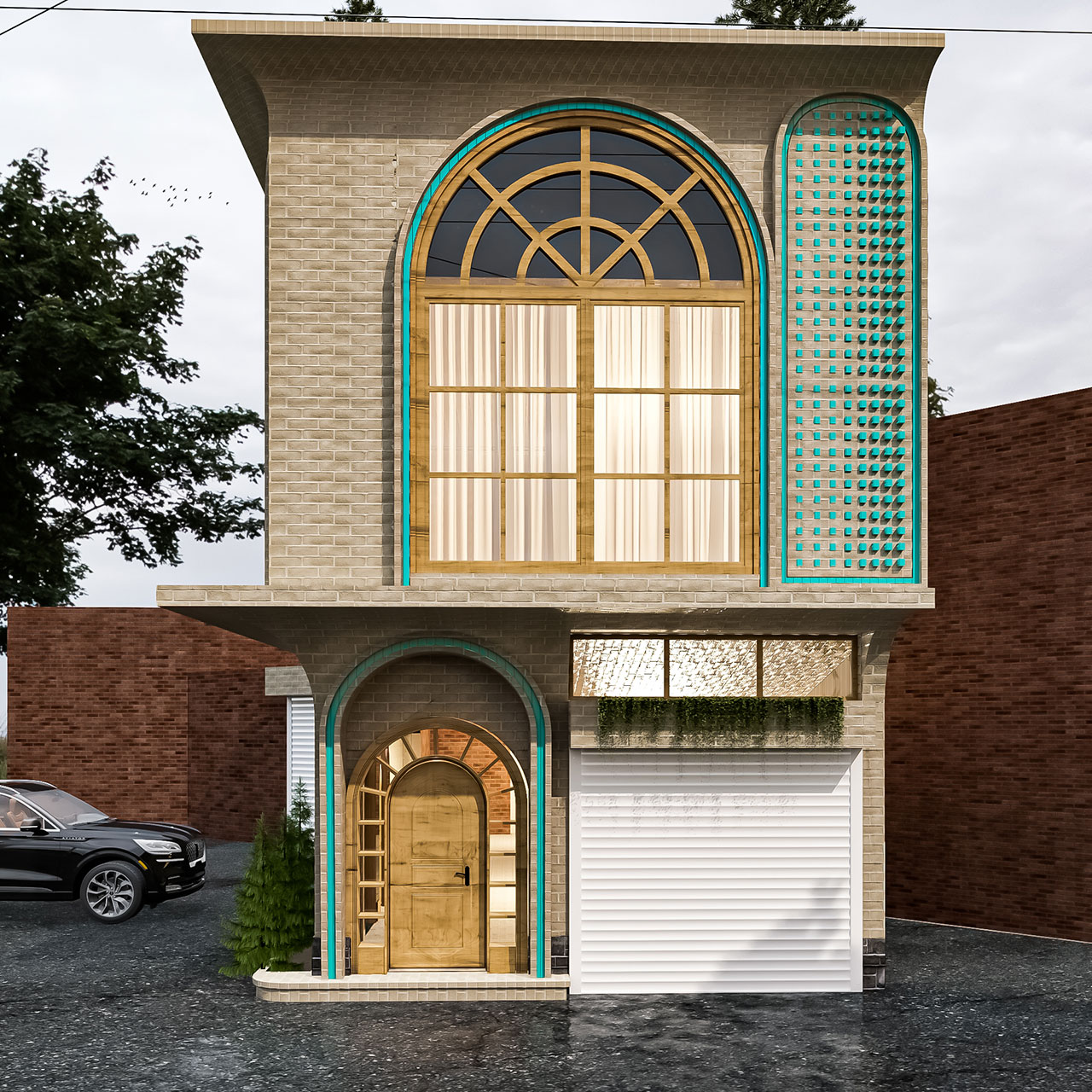
The two-story massing is carefully calibrated to align with the surrounding urban fabric. Horizontal articulation and controlled vertical proportions ensure that the building does not dominate its context.
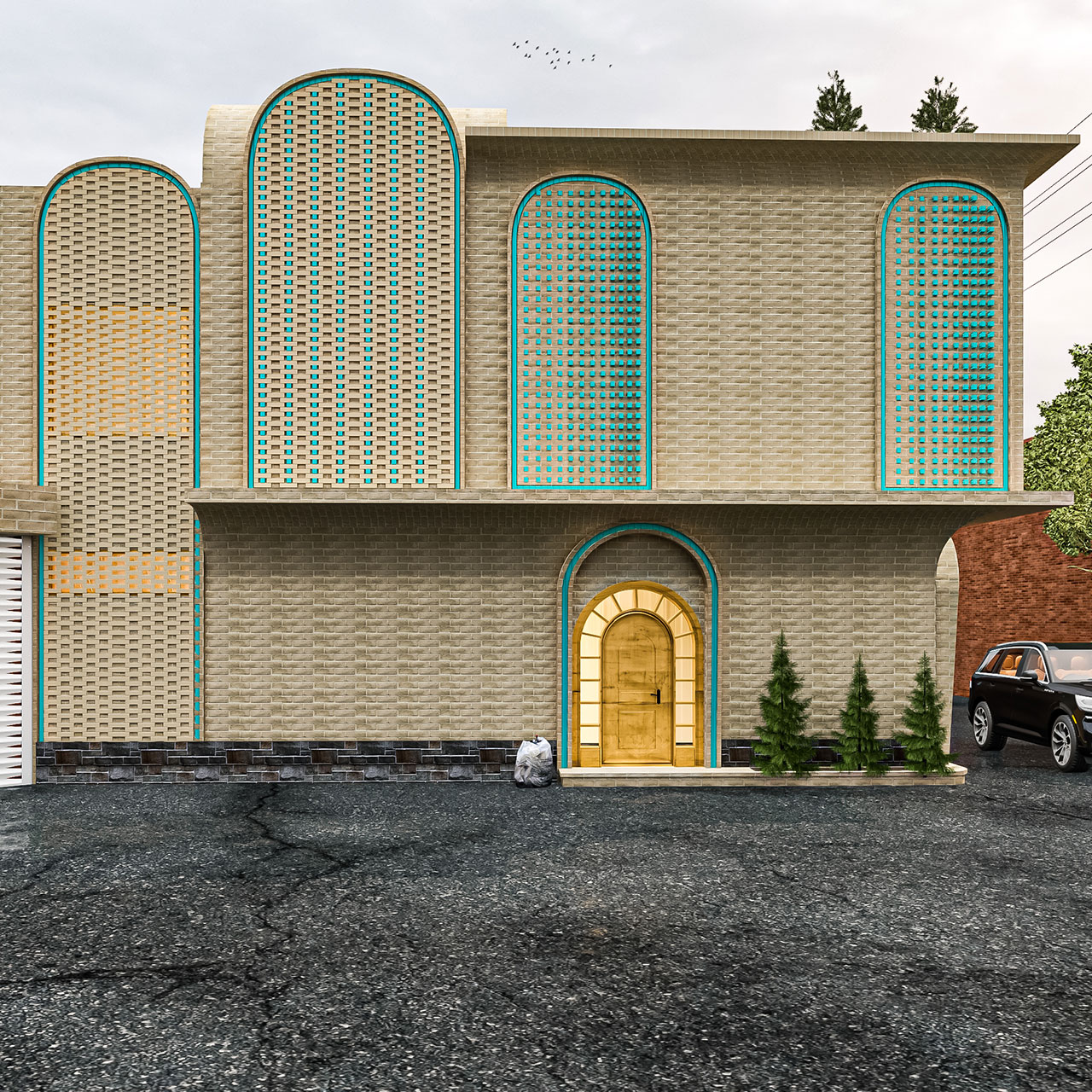
The façade composition follows a disciplined proportional system, creating a calm rhythm that resonates with neighboring historic buildings and reinforces the human scale of the street.
4. Materiality and Architectural Detail
Material selection plays a critical role in contextual integration. Materials were chosen for their textural quality, durability, and chromatic compatibility with the historic surroundings.
Architectural detailing is intentionally restrained. Instead of decorative excess, subtle depth, shadow lines, and precise joints articulate the façade, reinforcing its contemporary character while maintaining visual harmony with the context.
5. Light, Shadow, and Façade Depth
Inspired by traditional Iranian architecture, the façade design emphasizes depth over flatness. Recessed openings, layered surfaces, and controlled projections create dynamic shadow patterns throughout the day.
This approach not only enriches the visual experience but also contributes to thermal comfort and daylight control, merging environmental performance with architectural expression.
6. The Façade as Part of the Urban Fabric
In this project, the façade is conceived as an extension of the street rather than an isolated object. Its rhythm, scale, and material presence are designed to participate in the collective identity of the historic fabric.
The goal is continuity rather than contrast—an architecture that quietly belongs.
Conclusion: Ribo Architecture Studio’s Approach to Historic Contexts
This two-story façade project reflects Ribo Architecture Studio’s approach to architectural intervention in historic environments: respectful, contemporary, and deeply rooted in cultural understanding.
At Ribo Architecture Studio, we believe that architecture in historic contexts should evolve through interpretation rather than imitation. By translating Iranian architectural principles into a modern language, our work seeks to preserve identity while addressing today’s functional, environmental, and social needs. This project embodies our commitment to creating architecture that is timeless, contextual, and human-centered—architecture that contributes meaningfully to the continuity of the city.
No comments yet.