

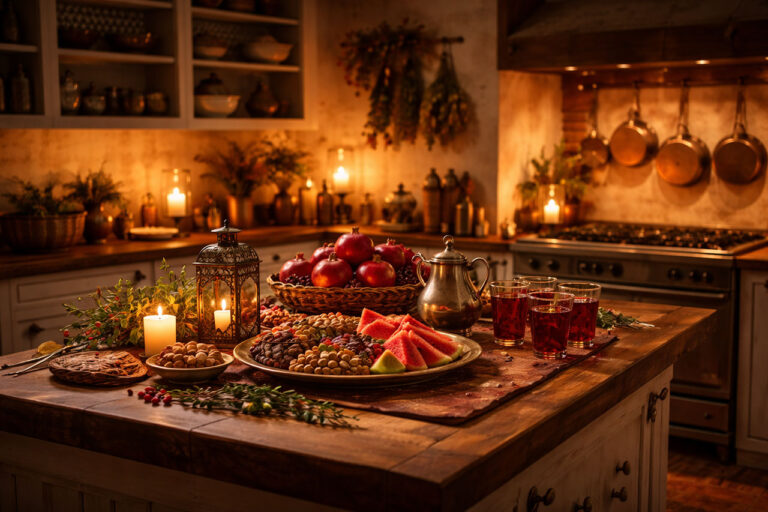
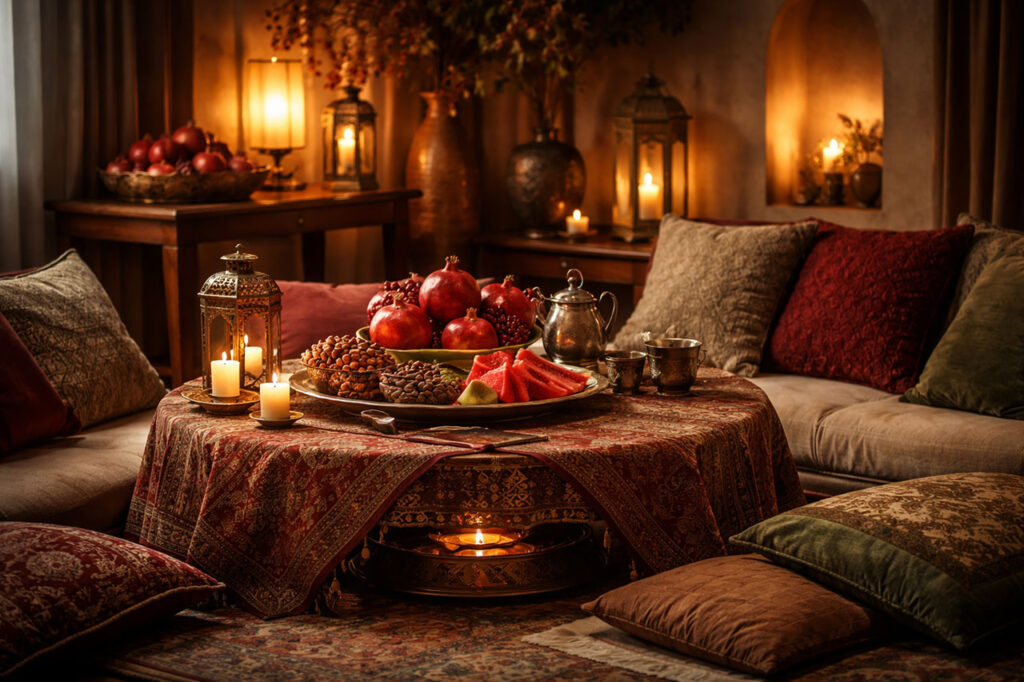
Yalda Night is more than a seasonal celebration—it is one of Iran’s oldest cultural traditions, rooted in themes of light, warmth, togetherness, and human connection. Interior design for this occasion can go beyond temporary decoration and become a meaningful spatial experience that reflects cultural identity while supporting comfort and intimacy.
Thoughtful interior design transforms Yalda Night into an atmosphere where architecture becomes a setting for memory, tradition, and shared moments.
1. The Concept of Yalda in Interior Design
In architecture and interior design, cultural rituals carry spatial meaning. Yalda Night is defined by contrasts such as:
Light versus darkness
Warmth versus cold
Gathering versus solitude
An effective Yalda-inspired interior translates these ideas into space through materiality, lighting, and layout, creating a warm and emotionally engaging environment.
2. Color Palette: Expressing Warmth and Vitality
Color selection plays a vital role in establishing the Yalda atmosphere. Deep, warm tones help create a sense of intimacy and comfort.
Recommended colors include:
Pomegranate red, symbolizing life and energy
Deep green for balance
Soft beige and cream for calmness
Natural wood tones for warmth
These colors should be applied selectively to maintain visual harmony and avoid overwhelming the space.
3. Lighting Design: The Soul of Yalda Night
Lighting is the most important design element for Yalda Night. Warm, low-intensity lighting softens the environment and encourages closeness.
Effective lighting strategies include:
Indirect warm lighting
Table lamps and floor lamps
Candlelight for emotional depth
Reducing harsh overhead or cool lighting
Well-designed lighting enhances comfort and creates a welcoming, intimate atmosphere.
4. Spatial Arrangement: Encouraging Togetherness
Interior layouts for Yalda Night should promote gathering and conversation. Furniture arrangements play a key role in shaping social interaction.
Design considerations include:
Bringing seating closer together
Creating a central focal point such as a shared table or a contemporary interpretation of the traditional korsi
Using low seating, poufs, and cushions
Circular or semi-circular layouts strengthen the sense of unity and participation.
5. Materials and Textures: The Tactile Experience of Warmth
Material choice is essential in enhancing the sensory quality of space. Warm, tactile materials increase comfort and emotional connection.
Suggested materials include:
Wool, velvet, and natural fabrics
Persian rugs and kilims
Natural wood and handcrafted elements
Layering textures adds depth, character, and visual richness to the interior.
6. Yalda Decorations with a Contemporary Approach
In professional interior design, Yalda elements are expressed symbolically rather than excessively.
Examples include:
Minimal use of pomegranates and watermelon
Traditional objects with simplified forms
Cultural elements such as poetry books
Blending traditional motifs with modern furniture
This approach creates a balanced dialogue between tradition and contemporary design.
7. A Multisensory Spatial Experience
Interior design extends beyond visual elements. A complete Yalda experience engages multiple senses:
Soft traditional or ambient music
Warm seasonal scents such as cinnamon or pomegranate
Acoustic comfort and calm
Together, these elements elevate the emotional quality of the space.
Conclusion: opportunity to rethink our relationship with space
Yalda Night offers an opportunity to rethink our relationship with space, light, and one another. Thoughtful interior design transforms this tradition into a meaningful and memorable experience. Warm lighting, natural materials, deep colors, and human-centered layouts are principles that enhance not only Yalda celebrations but also everyday living.
At Ribo Architecture Studio, interior design is understood as a medium for strengthening cultural and human experiences. The studio’s approach is rooted in a deep appreciation of Iranian traditions, combined with contemporary architectural thinking. By integrating light, material, and human scale, Ribo Architecture Studio creates interiors that extend beyond seasonal events—spaces that foster comfort, identity, and lasting emotional connection.
No comments yet.