

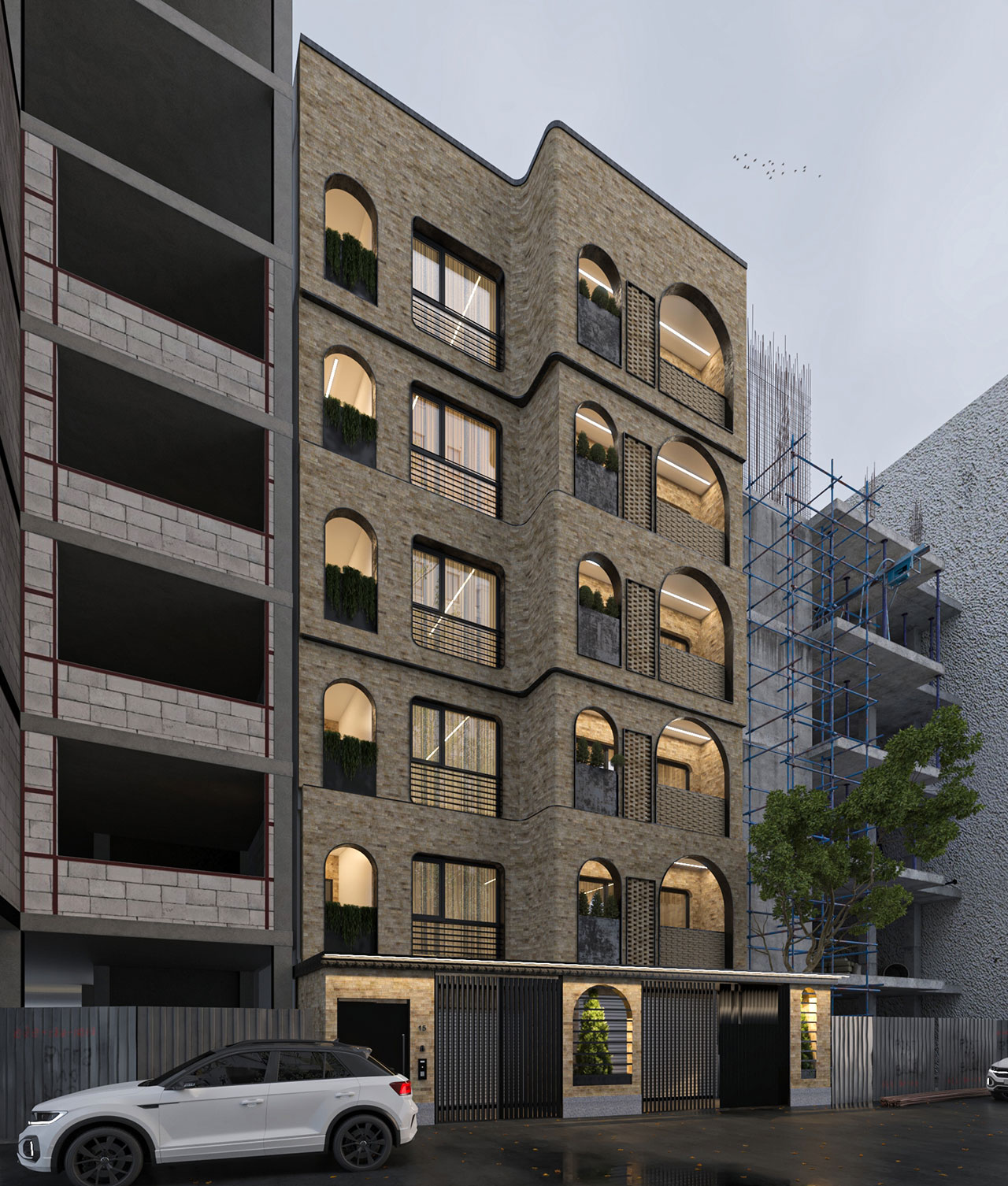
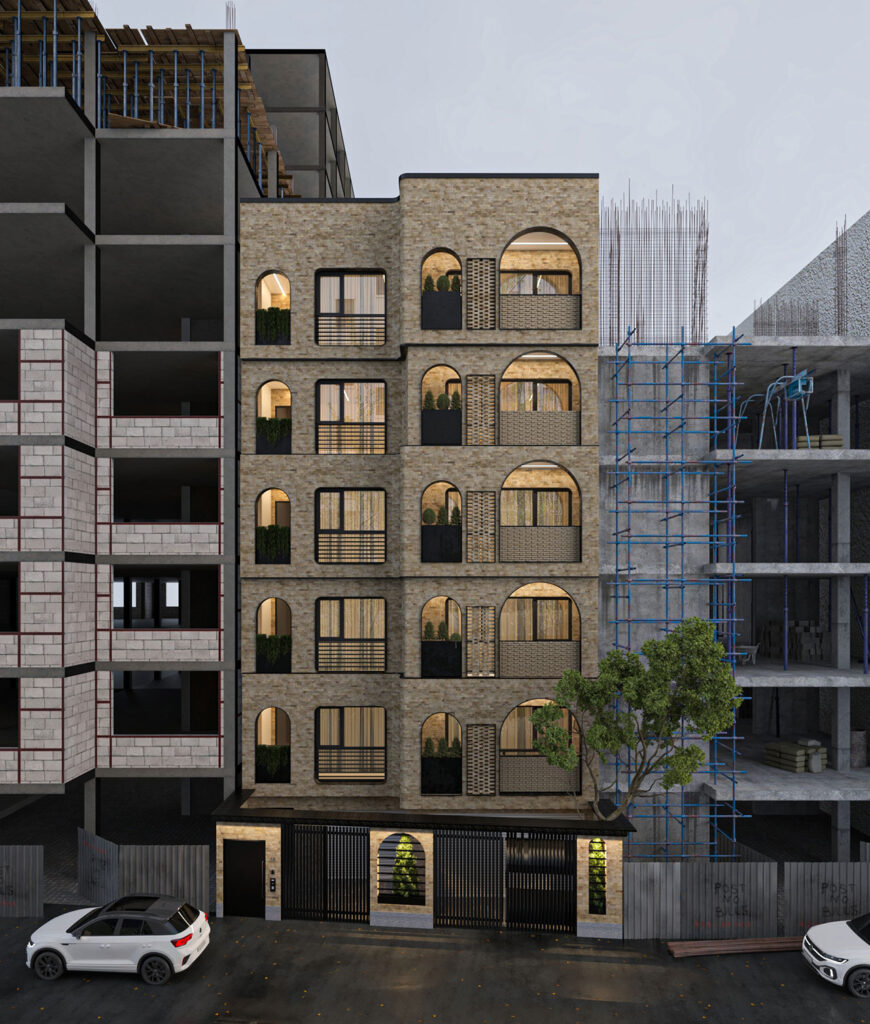
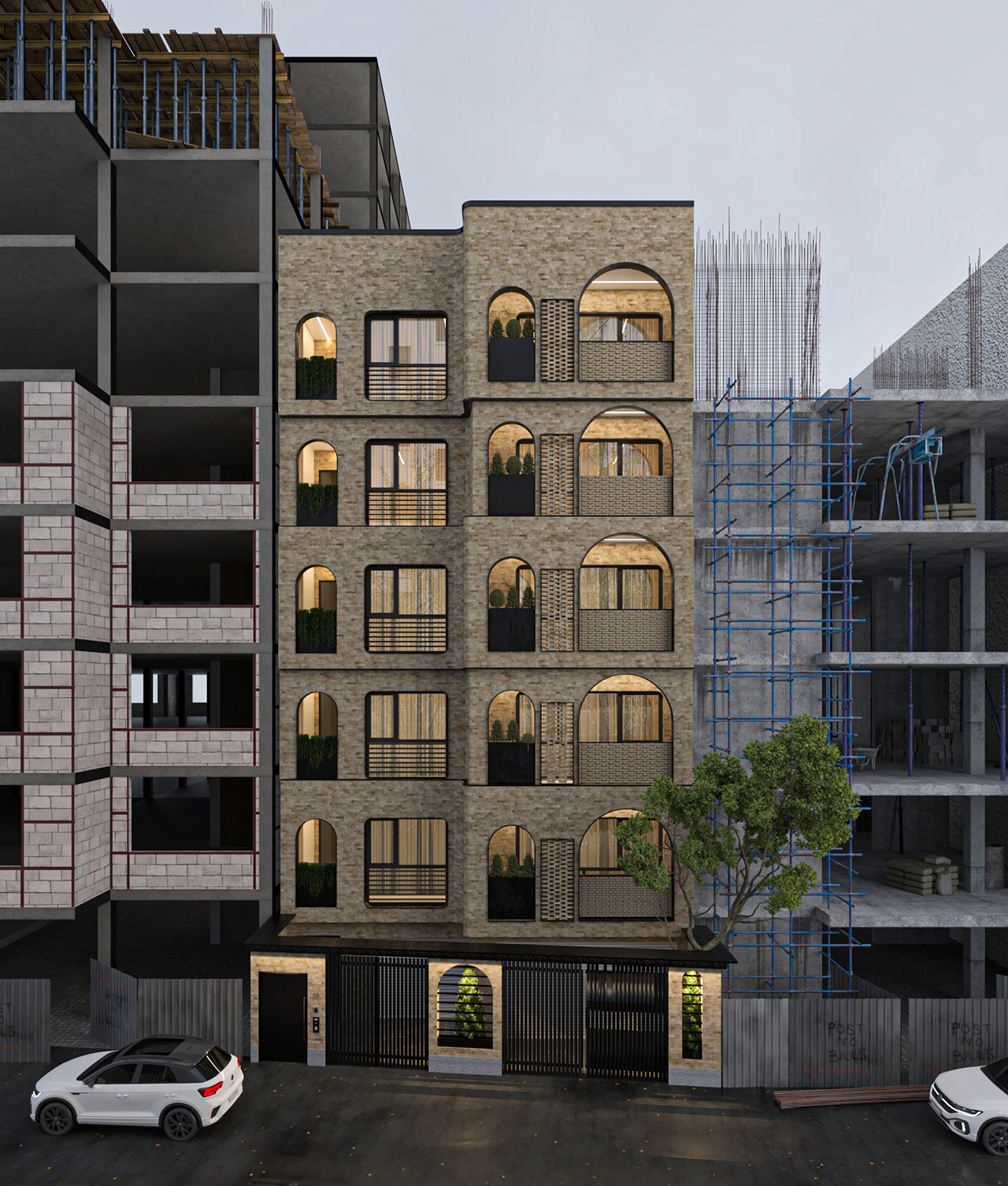
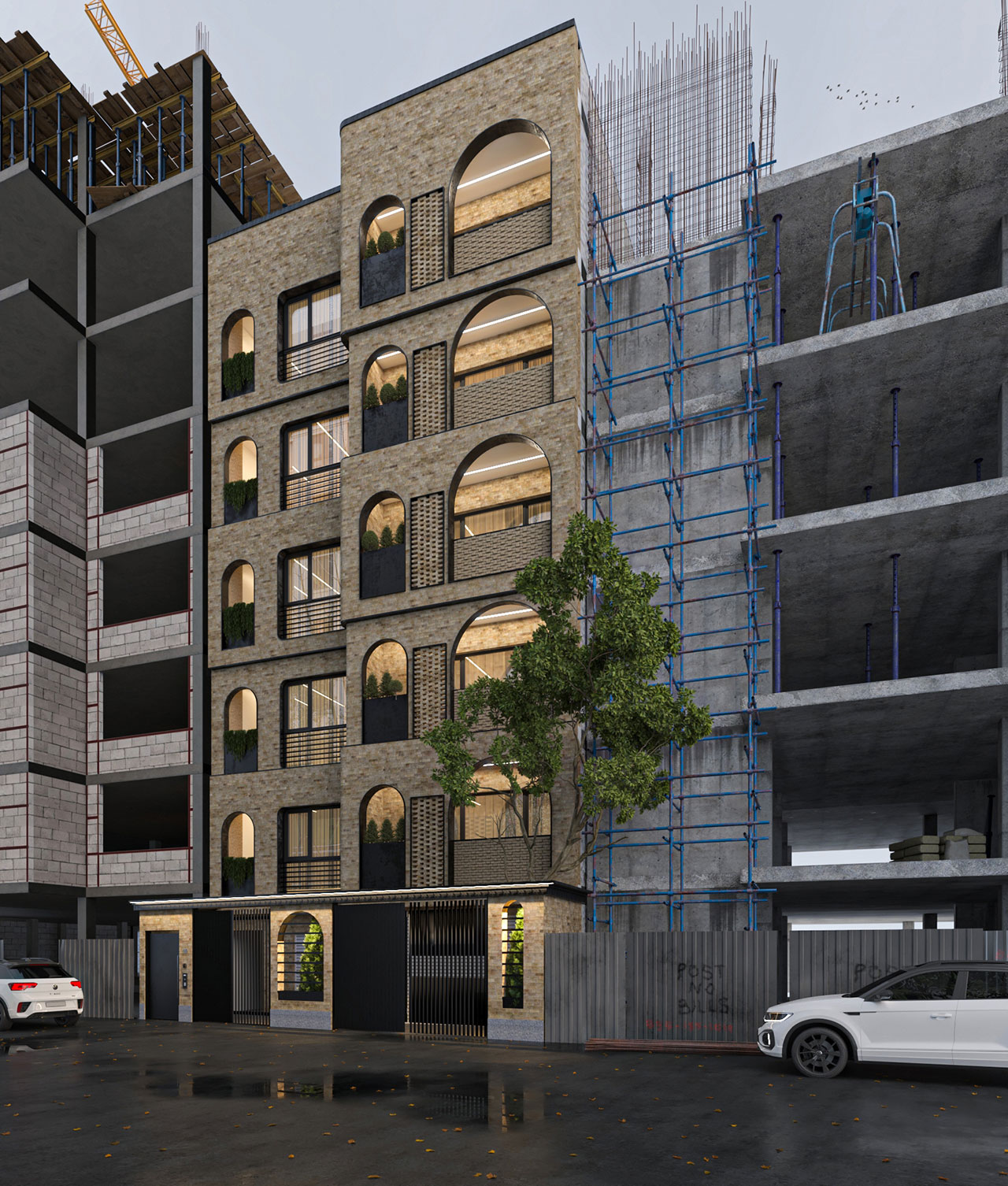
The facade design of a residential building is one of the most critical stages in shaping a project’s architectural identity. A facade not only defines the building’s visual presence within the city, but also plays a key role in durability, environmental performance, and the residents’ sense of belonging. In this project, rustic brick was selected as the primary facade material to create a balanced dialogue between architectural authenticity, contemporary simplicity, and climatic responsiveness. This choice has resulted in a warm, enduring, and context-sensitive architectural expression.
1. Rustic Brick: A Material with Character
Rustic brick, with its natural texture, uneven surface, and warm color variations, is a material that conveys craftsmanship and authenticity. Unlike smooth industrial bricks, rustic brick carries a distinct character, where each unit contributes to a dynamic and living composition.
Key advantages of rustic brick in residential architecture include:
Creating a sense of warmth and domestic comfort
Strong compatibility with local climate and Iranian architectural traditions
High resistance to temperature fluctuations and weather conditions
Low maintenance requirements over time
These qualities make rustic brick a thoughtful and sustainable choice for residential facade design.
2. Facade Concept and Design Strategy
The main design concept of this residential facade is based on simplicity, rhythm, and spatial depth. In this project, rustic brick is not treated as a superficial cladding, but rather as a defining architectural element that shapes the building’s overall language.
The brick pattern is carefully aligned with the placement of openings in order to:
Maintain a clear balance between solid and void
Avoid visual monotony
Strengthen the overall legibility of the building volume
Subtle variations in brick arrangement add character and identity to the facade without introducing visual clutter.
3. Construction Details and Material Precision
When designing a brick facade, construction detailing plays a crucial role in the final architectural quality. Mortar joints, corner treatments, and edge conditions significantly influence both appearance and durability.
In this project:
Mortar joints were selected to enhance the texture and depth of the brick surface
Window frames and edges were carefully detailed to preserve visual continuity
Brick was combined with minimal complementary materials to maintain a clear architectural focus
Attention to these details ensures long-term durability while reinforcing the facade’s architectural integrity.
4 .Interaction of Light, Shadow, and Texture
One of the most valuable characteristics of rustic brick is its interaction with natural light. The textured surface of the brick responds dynamically to sunlight, producing varying shadow patterns throughout the day.
As a result:
The facade changes visually over time
The building gains a sense of movement and vitality
Visual flatness is reduced within the urban context
Light and shadow were considered integral components of the design process rather than incidental effects.
5. Integration with the Urban Context
Residential facade design must respond sensitively to its surrounding environment. This project seeks to establish a balanced relationship with neighboring buildings while maintaining its own architectural identity.
The color, texture, and scale of the rustic brick allow the building to:
Blend naturally with the existing urban fabric
Contribute to visual continuity along the street
Remain recognizable without overwhelming its context
This approach avoids unnecessary contrast while reinforcing architectural coherence at the urban scale.
Conclusion: Facade Design Rustic Brick Material
The residential facade design using rustic brick demonstrates how a thoughtful material strategy can result in architecture that is warm, durable, and contextually responsive. Through simplicity, precise detailing, and careful consideration of light and urban context, this project aims to enhance both the visual and experiential quality of residential living.
In this direction, Ribo Architecture Studio approaches facade design as an essential part of everyday urban experience rather than a decorative surface. By closely analyzing site conditions, material behavior, and user needs, the studio creates architectural solutions that balance aesthetics, performance, and identity. Ribo Architecture Studio’s design philosophy ensures that each facade becomes a meaningful and lasting component of contemporary architecture and daily life.
No comments yet.