

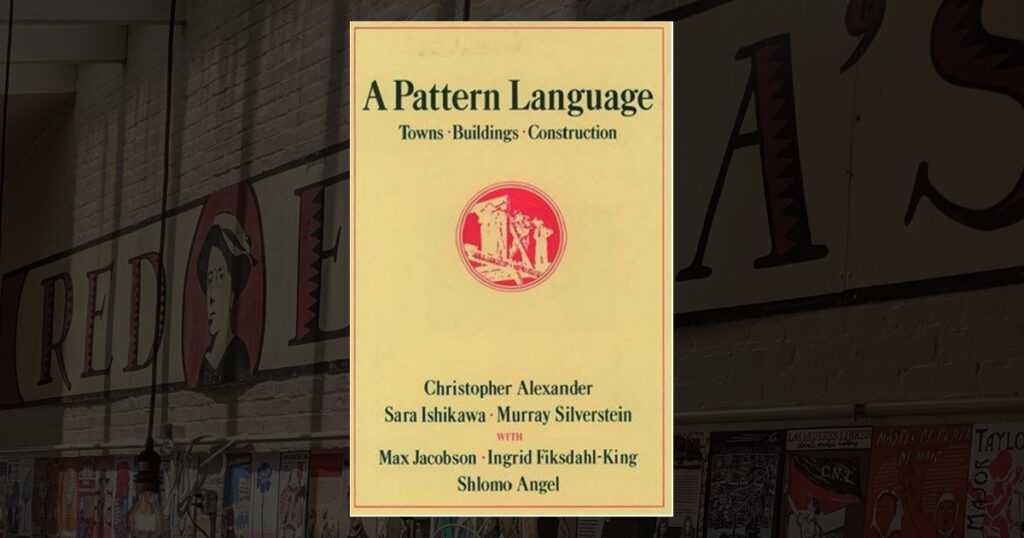
Authors: Christopher Alexander, Sara Ishikawa, Murray Silverstein
Published: 1977
Overview:
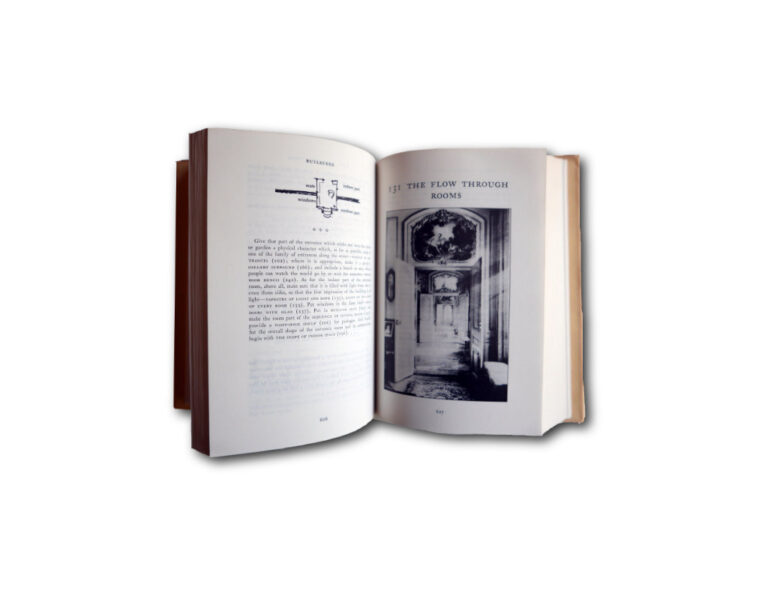
A Pattern Language introduces 253 design patterns that guide the creation of towns, neighborhoods, buildings, and even individual rooms. Each pattern identifies a recurring design problem and provides practical solutions, forming a “language” architects can use to create spaces that are functional, beautiful, and human-centered.
The book is not a traditional textbook; it is a toolkit for thinking and designing, helping architects, urban planners, and designers solve complex problems intuitively.
1. About the Authors
Christopher Alexander: Renowned architect and theorist who revolutionized architecture with a focus on human experience and livable spaces. His work influenced not only architecture but also urban planning, education, and even software development.
Sara Ishikawa & Murray Silverstein: Key collaborators who structured and documented the patterns in a clear, practical way, making the book actionable for real-world design.
2. Why Architects Should Read This Book
Human-Centered Design: Encourages creating environments that prioritize comfort, usability, and social interaction over rigid aesthetic formulas.
Multi-Scale Thinking: Patterns range from city layout and public spaces to the smallest details of room design, training architects to think holistically.
Practical & Adaptable: Each pattern provides actionable guidance, yet can be combined, modified, or adapted to fit the specific context.
Timeless Insights: Despite being published decades ago, the principles still resonate, proving their long-lasting relevance.
Creative Inspiration: Beyond rules, it fosters innovative problem-solving and helps architects find solutions that feel alive and natural.
Collaboration-Friendly: Offers a shared vocabulary that allows architects, planners, and clients to communicate ideas effectively.
3. Strengths
Human-Focused: Prioritizes how people feel, move, and interact in spaces.
Comprehensive: Addresses design at every level, from city streets to furniture layout.
Practical Framework: Patterns can be directly applied to projects, making it highly actionable.
Interdisciplinary Influence: Inspired software design, urban planning, and community-building concepts.
Flexibility: Encourages adaptation and creativity, rather than strict adherence to rules.
4. Weaknesses
Cultural Bias: Many patterns reflect Western architectural norms of the 1970s, which may not translate globally.
Potential Conflicts: Some patterns may contradict others; careful judgment is required.
Not a Step-by-Step Manual: Best used as inspiration and reference rather than a strict guide.
Learning Curve: The sheer number of patterns may feel overwhelming to beginners.
5. Examples of Notable Patterns
“Light on Two Sides of Every Room”: Maximizes natural light, enhancing comfort and well-being.
“Outdoor Room”: Creates intimate, usable outdoor spaces connected to indoor living areas.
“Car Connection”: Balances accessibility with minimizing car dominance in public spaces.
“Small Public Squares”: Encourages vibrant community interaction by designing gathering points.
These examples show how the patterns balance functionality, aesthetics, and human experience in every decision.
Conclusion: framework for thinking, designing, and creating spaces
A Pattern Language is more than a book — it is a framework for thinking, designing, and creating spaces that feel alive. Architects who read it learn to combine practical solutions with human-centered philosophy, producing buildings and communities that are both functional and emotionally resonant.
Whether designing a home, an office, or an entire neighborhood, this book encourages architects to prioritize people, usability, and timeless design principles, making it an essential read for anyone serious about shaping the built environment.
No comments yet.