

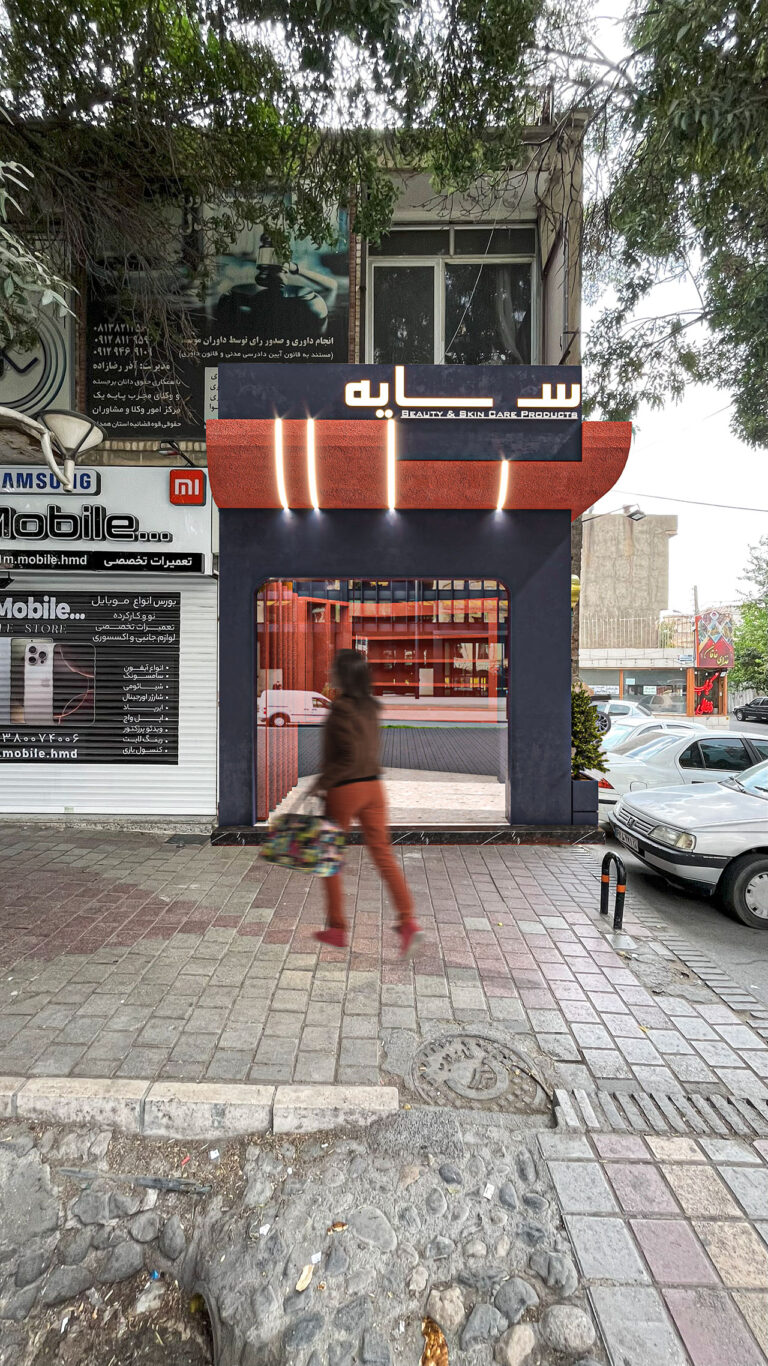
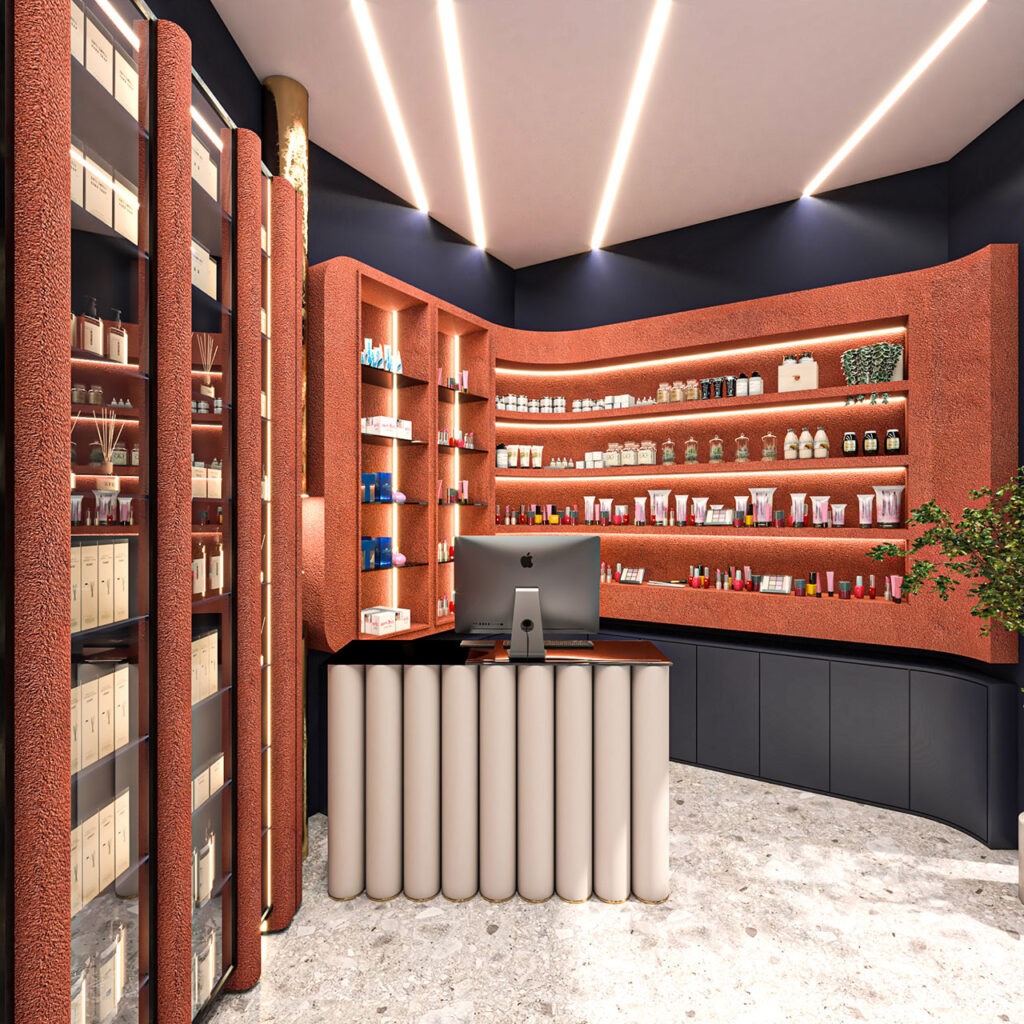
How Architecture Influences Trust, Experience, and Brand Identity
In the cosmetics and personal care industry, interior architecture plays a decisive role in shaping customer perception. These retail spaces are not merely places of transaction; they are environments where hygiene, aesthetics, and emotional comfort converge. A professionally designed store reinforces trust and brand value, while an unprofessional environment can diminish even high-quality products.
This article explores the architectural principles that distinguish professional from unprofessional cosmetics and personal care store design.
1. The Importance of Design in Cosmetics Retail
Cosmetics and personal care stores operate at the intersection of visual accuracy, cleanliness, and psychological comfort. Customers expect spaces that are clear, organized, and calming. Architectural decisions—ranging from spatial planning to lighting and material selection—directly influence purchasing behavior and the perceived quality of products.
Professional design aligns functionality, aesthetics, and brand identity into a cohesive spatial system.
2. Key Characteristics of Professional Store Design
2.1. Clear Spatial Organization
Professional design begins with logical planning. Circulation paths are intuitive, product zones are well-defined, and customers can navigate the store effortlessly.
Essential qualities include:
Clear zoning of product categories
Unobstructed sightlines
Comfortable circulation widths
Dedicated areas for product testing and consultation
This clarity reduces visual stress and supports a confident customer experience.
2.2. Thoughtful and Accurate Lighting Design
Lighting is one of the most critical elements in cosmetics retail. In professional environments, lighting is designed to:
Accurately represent product colors
Avoid harsh shadows and glare
Maintain visual comfort
Layered lighting strategies—ambient, accent, and task lighting—ensure both functional clarity and aesthetic balance.
2.3. Appropriate Material Selection and Hygiene
Materials in professional cosmetics stores are selected for durability, cleanliness, and visual coherence. Surfaces are typically:
Easy to clean and maintain
Visually calm and refined
Consistent with the store’s overall identity
Material continuity contributes to a sense of quality and trust.
2.4. Integration of Brand Identity Through Architecture
In professional design, branding is embedded within the architecture itself. Proportion, color palette, texture, and spatial rhythm reflect the brand’s values rather than relying solely on graphics or signage.
This approach creates a seamless and memorable brand experience.
2.5. User-Centered Experience Design
Professional stores prioritize the customer’s comfort and interaction:
Ergonomically designed testing stations
Proper mirror placement and lighting
Human-scaled furniture and counters
Every design decision supports usability and emotional ease.
3. Indicators of Unprofessional Store Design
3.1. Disorganized Layout
Unprofessional layouts often feature:
Confusing circulation paths
Overcrowded shelving
Visual clutter
These conditions increase cognitive load and shorten customer visits.
3.2. Poor Lighting Conditions
Inadequate lighting can:
Distort product colors
Create uncomfortable glare or shadows
Cause visual fatigue
Such issues directly undermine customer confidence.
3.3. Inconsistent or Low-Quality Materials
The use of mismatched or inferior materials often results in:
A temporary or low-end appearance
Reduced durability
Hygiene concerns
This weakens both spatial quality and brand credibility.
3.4. Superficial Branding
When branding is limited to logos and signage without architectural integration, the store feels generic and lacks identity.
3.5. Neglect of User Needs
Ignoring ergonomics, accessibility, and comfort leads to frustration and decreases the likelihood of repeat visits.
4. Why Professional Design Is Essential
In cosmetics and personal care retail, customers are not only purchasing products—they are investing in confidence, self-care, and trust. Architecture plays a fundamental role in shaping this experience.
Professional design:
Enhances perceived product value
Builds long-term brand trust
Encourages longer in-store engagement
Supports stronger customer loyalty
Conclusion: Design as a Strategic Investment
Cosmetics and personal care store design should be approached as a strategic investment, not merely a visual upgrade. Professional architecture integrates function, aesthetics, and psychology to create environments that support both commercial success and human experience.
In an increasingly competitive market, successful retail spaces are defined not by excess, but by clarity, consistency, and intentional design.
No comments yet.