

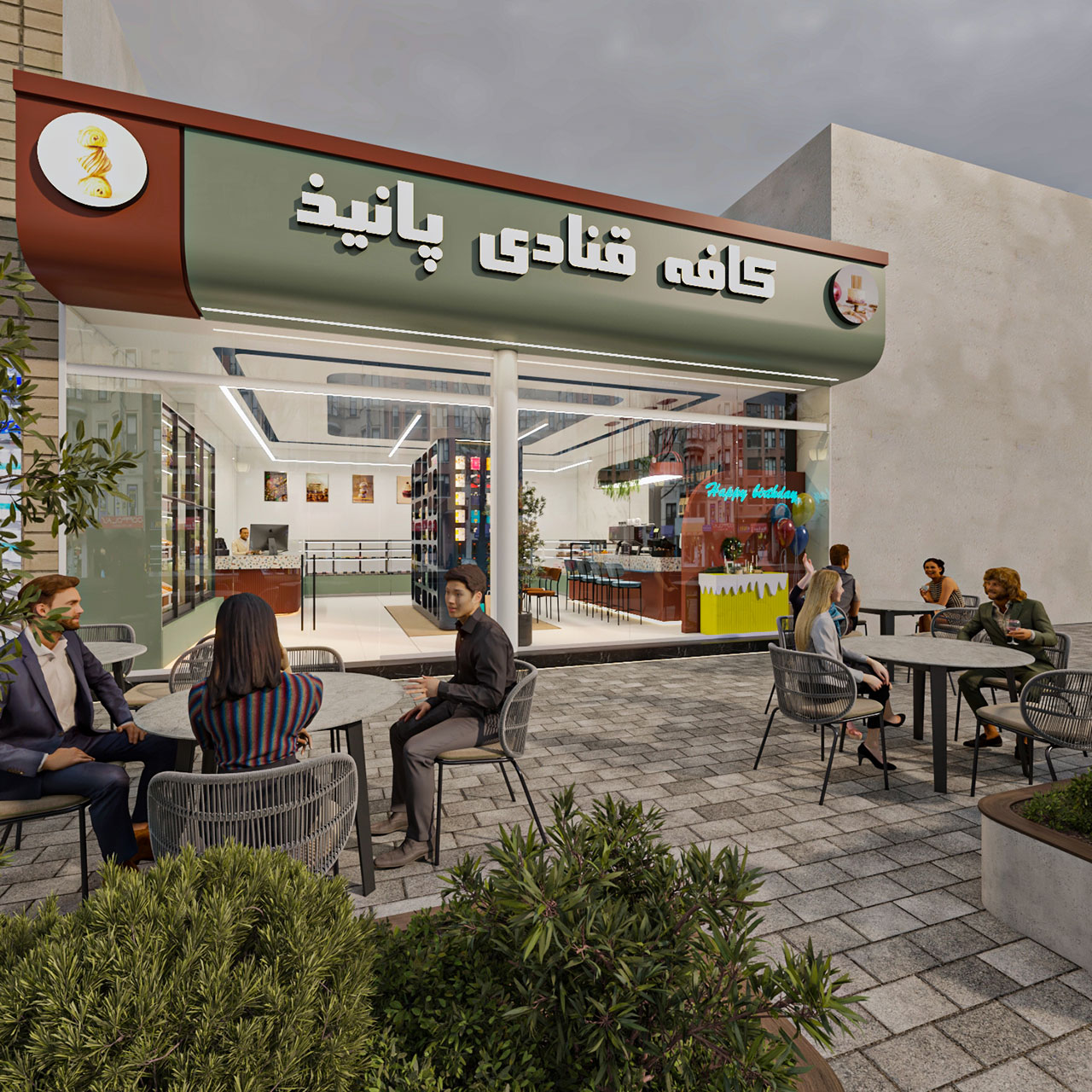

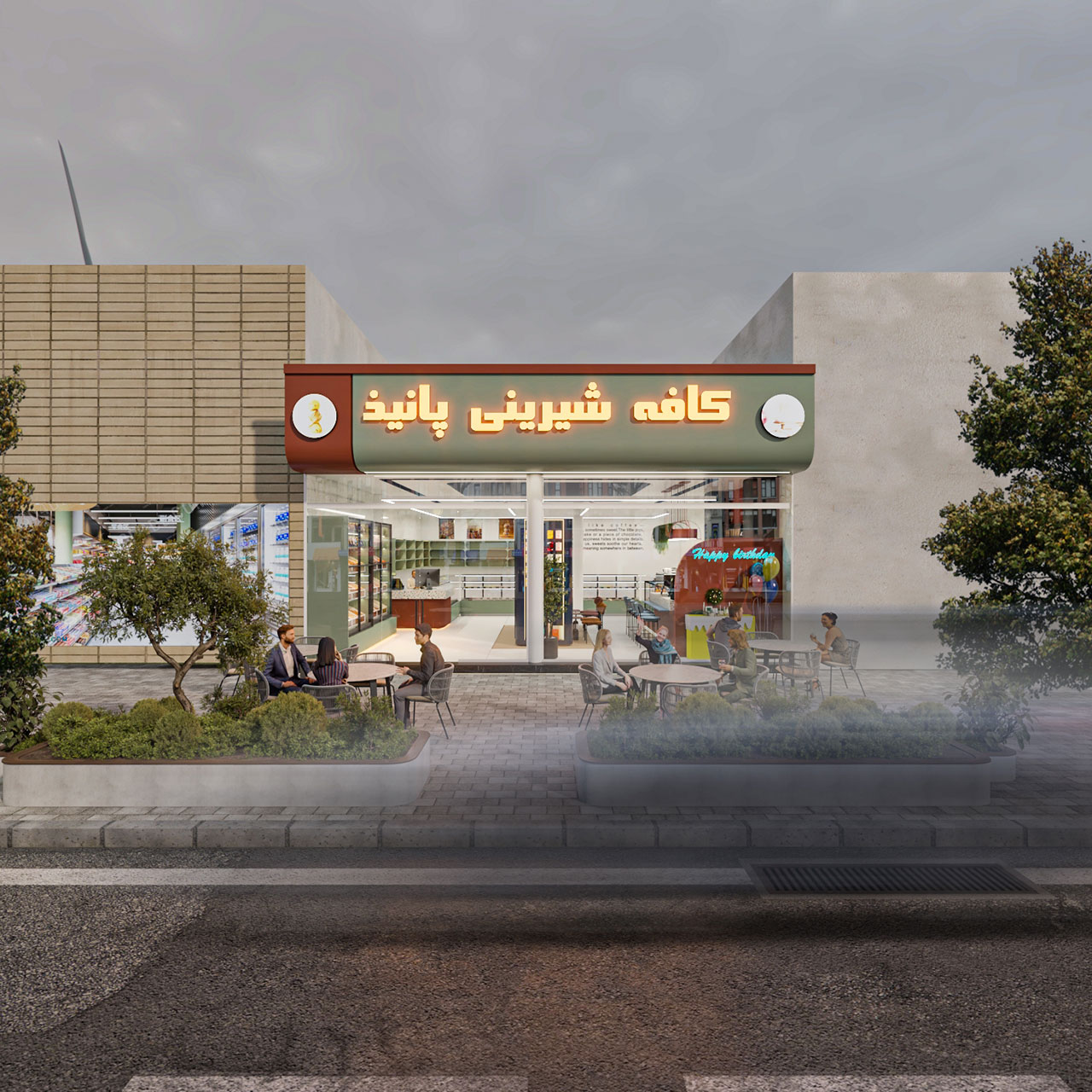


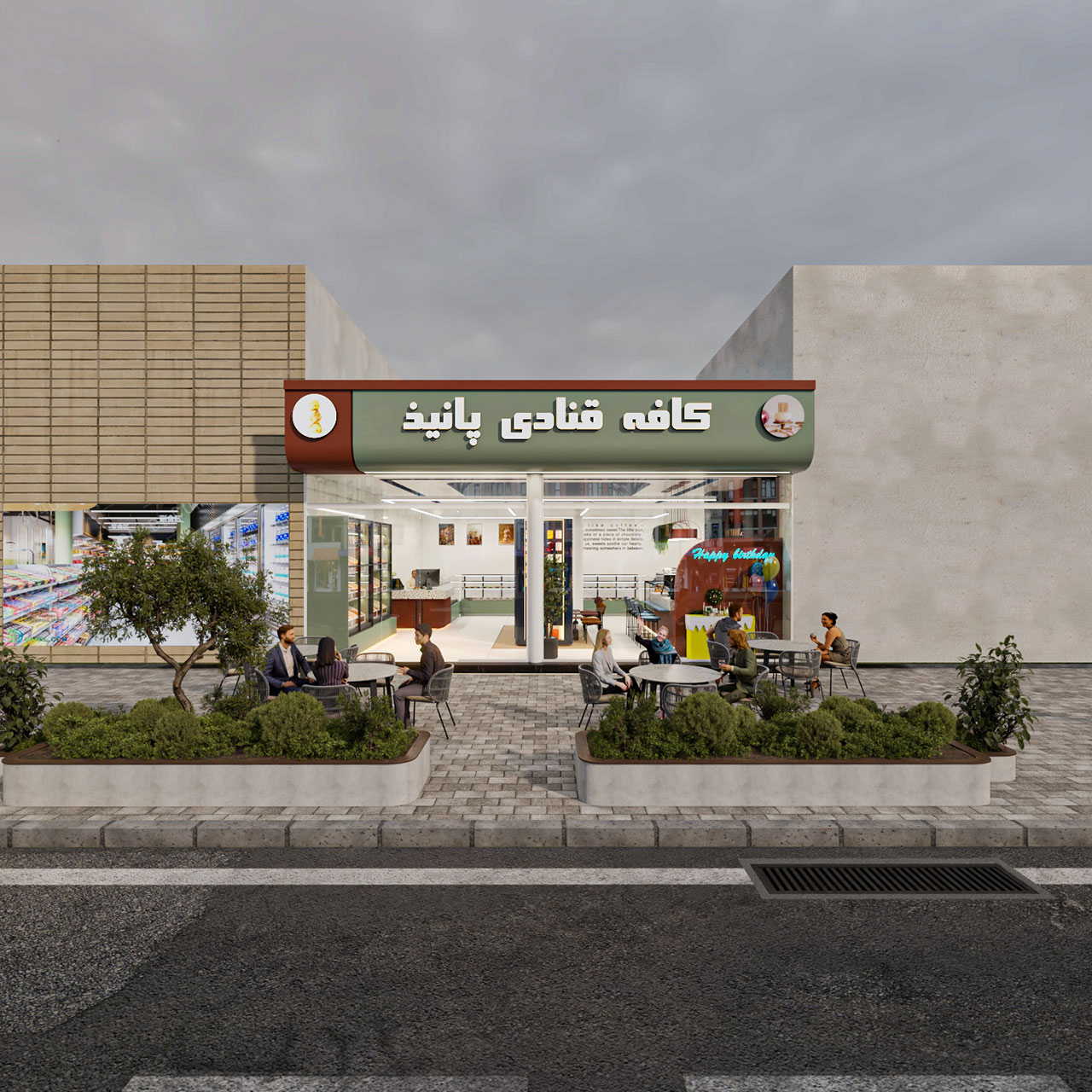

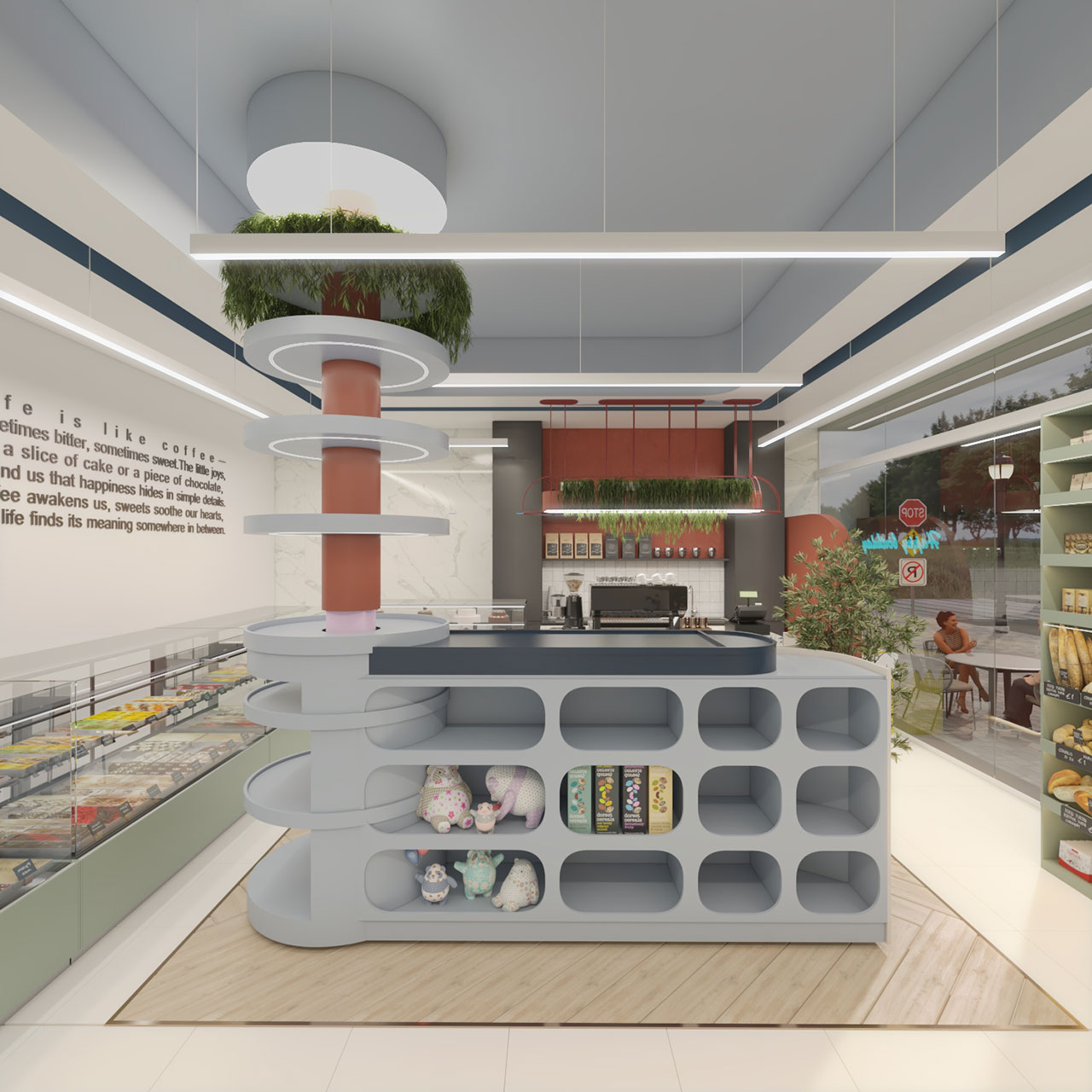


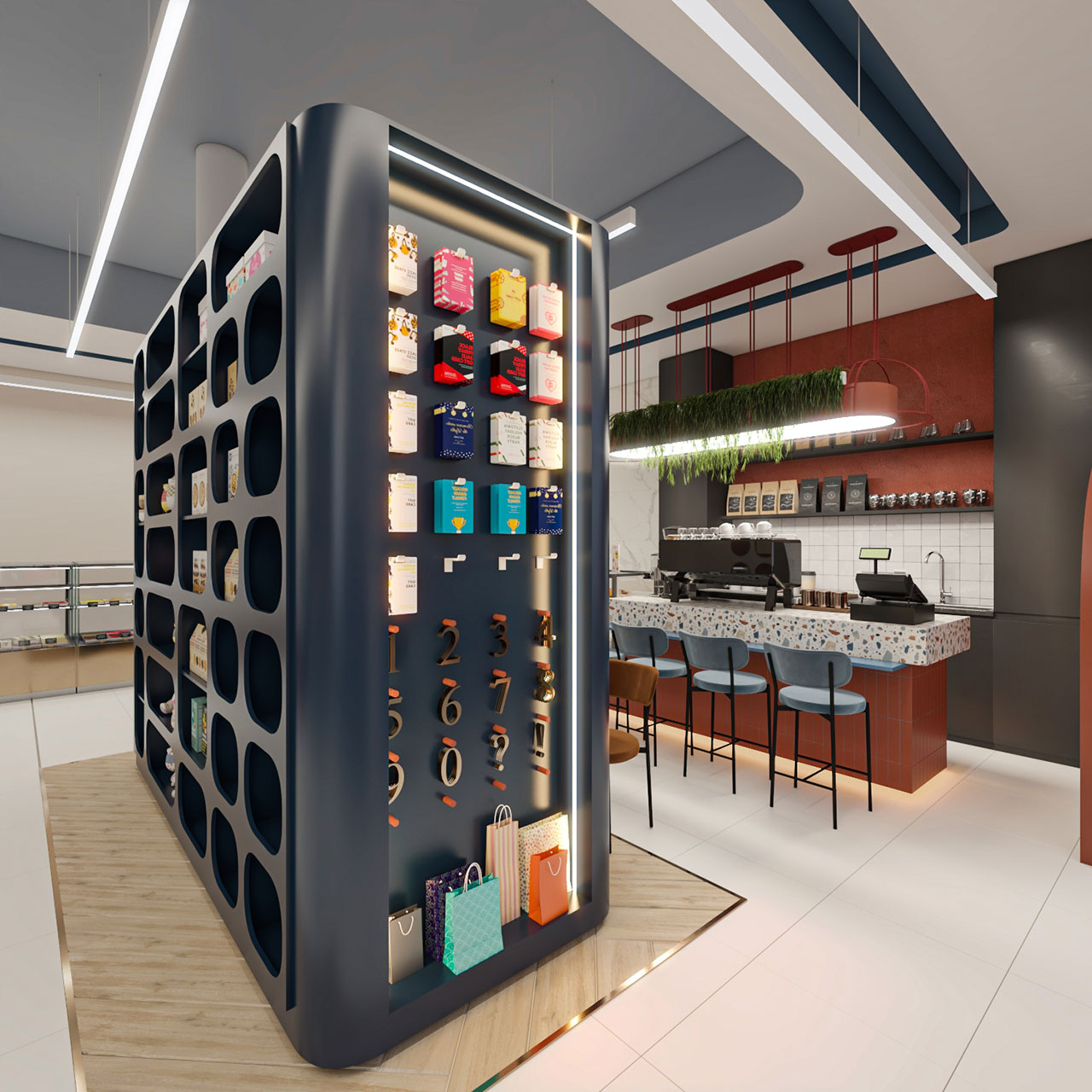

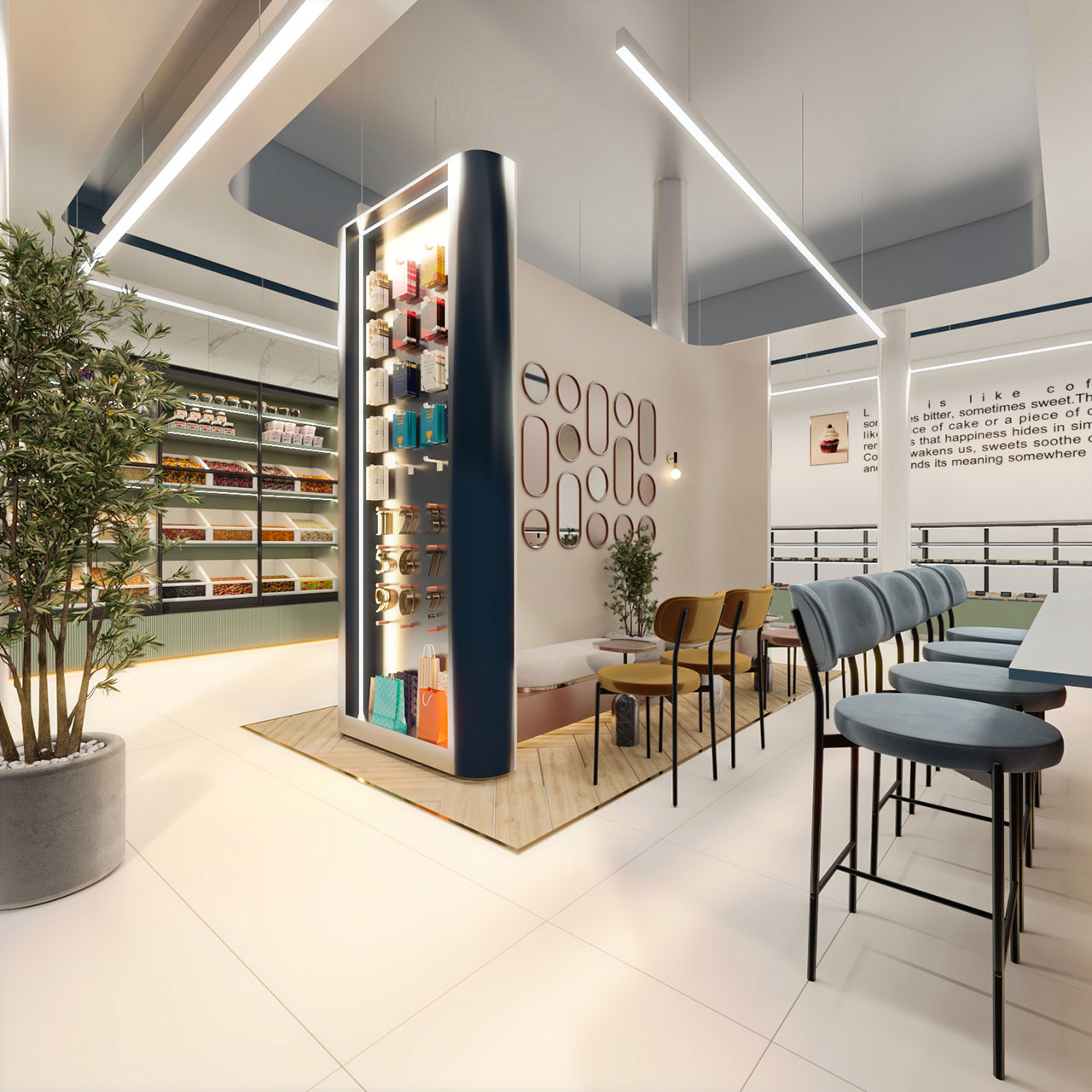
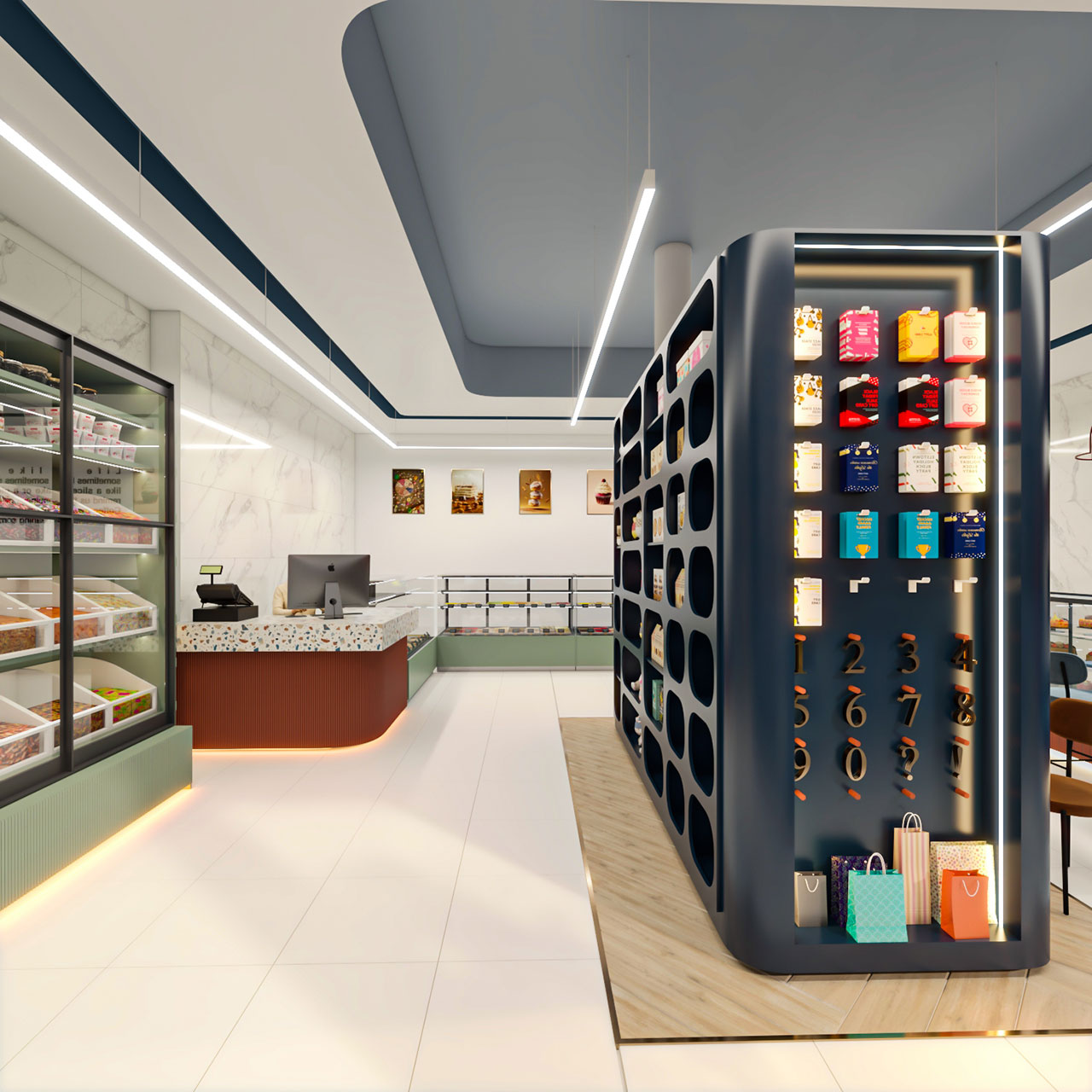
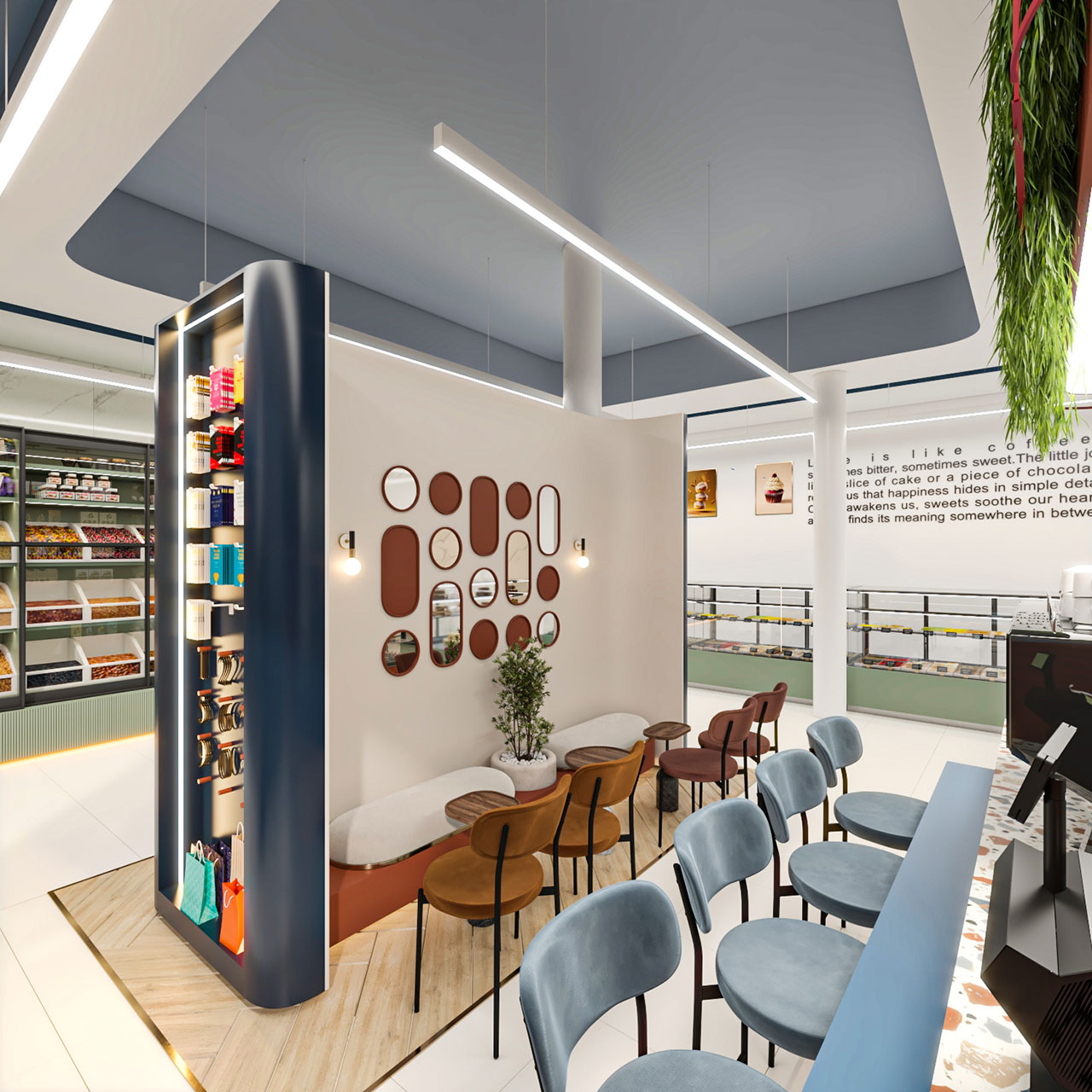

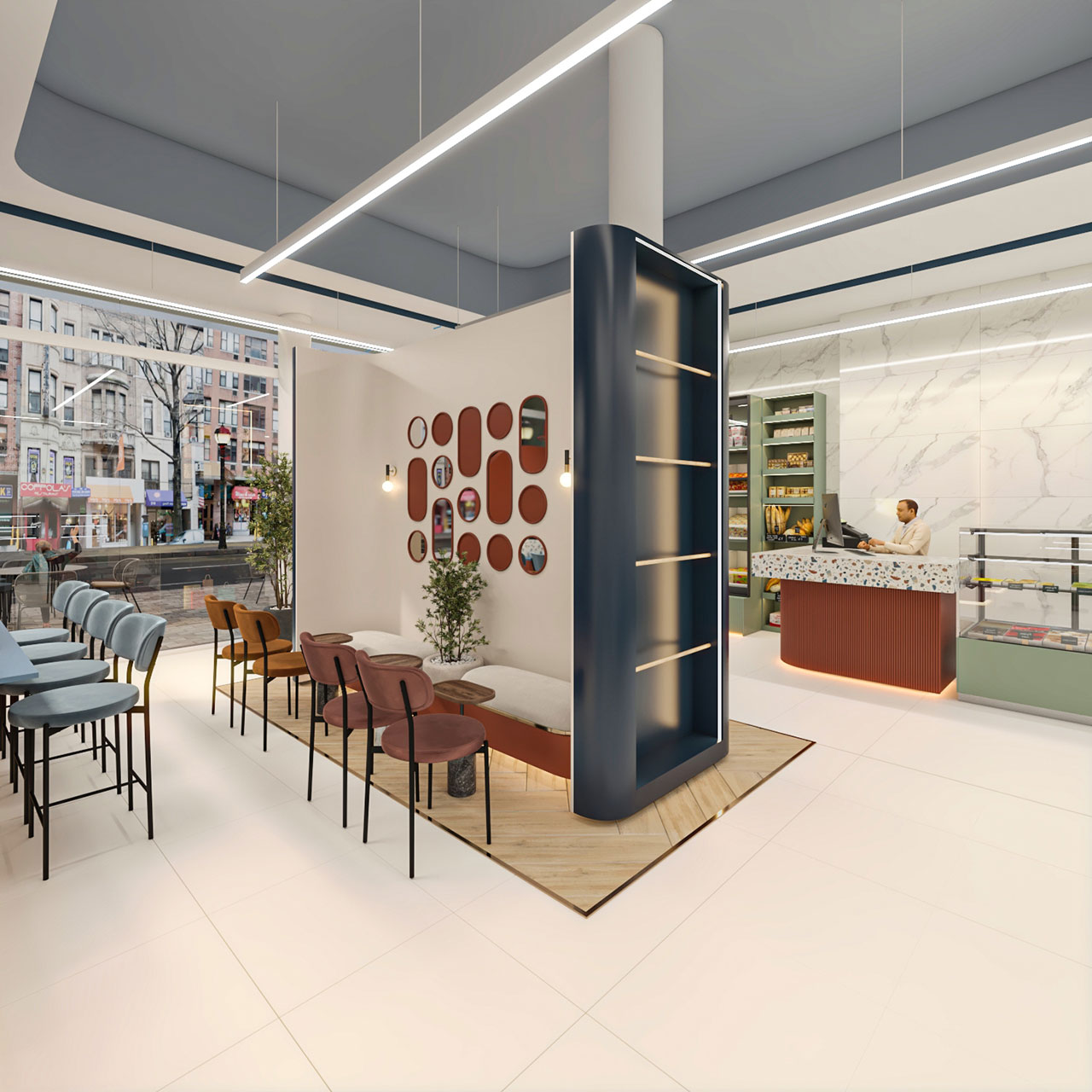
The Paniz Café & Patisserie project was designed and executed with the goal of creating a warm, inviting, and distinctive environment—one that enhances the experience of taste, pause, and social interaction through architecture. In this project, architecture goes beyond being a backdrop and becomes an essential part of the brand identity and customer experience.
1. Design Concept
The core concept behind Paniz Café & Patisserie was to establish a balance between comfort, elegance, and commercial functionality. The space was designed to accommodate both quick daily visits and longer social gatherings, offering flexibility without compromising atmosphere.
Key elements shaping the design concept include:
Creating a sense of warmth and approachability
Strengthening visual connections between the service area and food preparation
Designing clear circulation paths for customers and staff
Aligning the spatial character with the café’s brand identity
2. Spatial Organization and Functionality
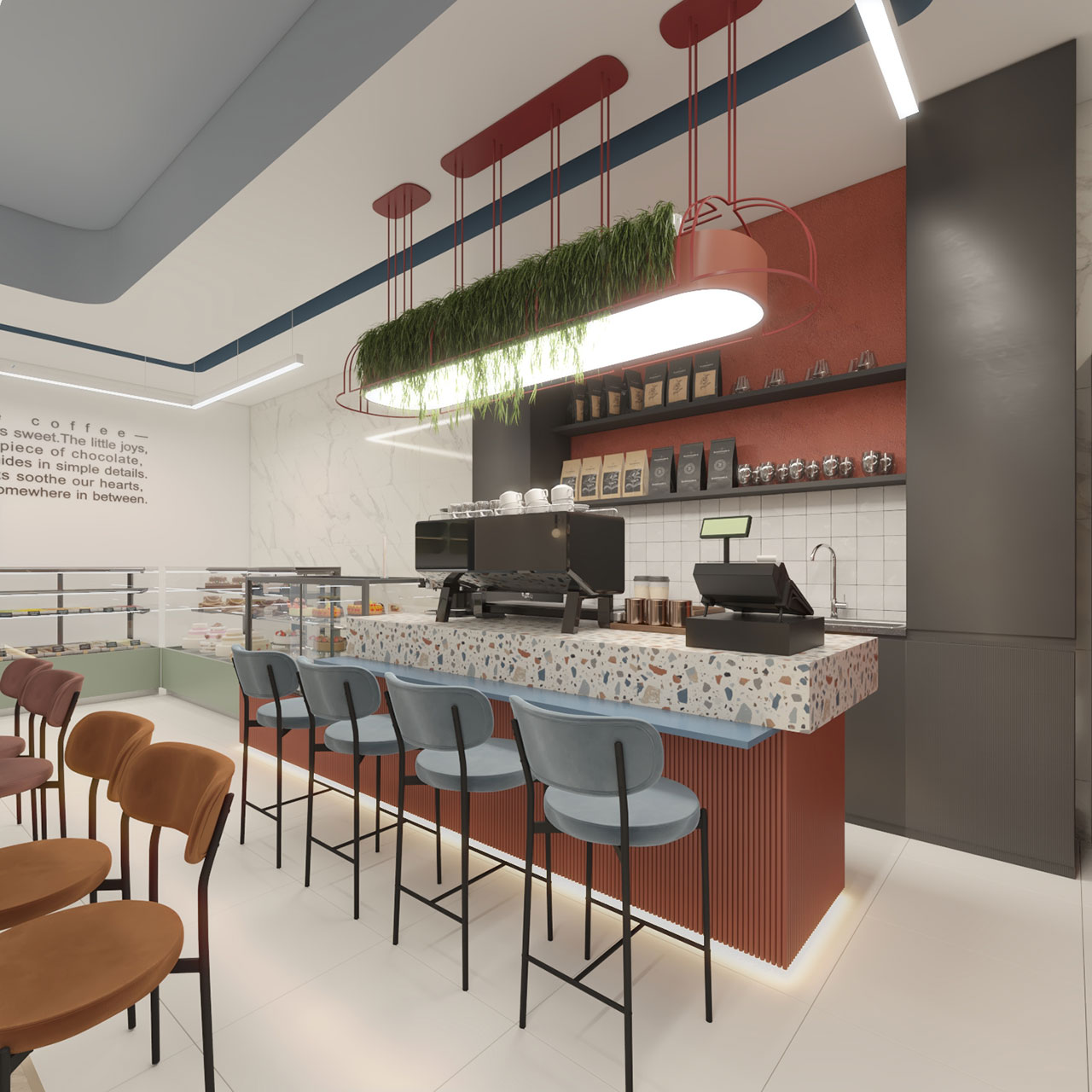
The spatial layout of the project was carefully planned around the primary functions of a café and patisserie. The placement of the counter, product displays, seating areas, and circulation routes ensures a smooth and intuitive customer experience.
Clear separation between public and service zones enhances both operational efficiency and visual order within the space.
3. Materials and Architectural Details
Material selection in the Paniz Café & Patisserie project focused on durability, hygiene, and aesthetic quality. Warm materials were combined with clean, modern surfaces to create a balanced and welcoming interior that reflects the contemporary nature of the space.
Architectural details were thoughtfully designed and executed to maintain long-term quality while reinforcing the project’s visual identity.
4. Lighting and Atmosphere
Lighting plays a crucial role in shaping the atmosphere of Paniz Café & Patisserie. A layered lighting strategy—combining ambient and accent lighting—highlights the products while creating a cozy and inviting environment for customers. Light is treated as a key architectural element that enhances sensory experience and spatial depth.
5. Project Outcome
The final result is a space where architecture, function, and user experience work together seamlessly. Paniz Café & Patisserie stands as an example of commercial interior design where attention to detail, brand alignment, and user behavior directly contribute to the overall quality of the project.
Conclusion: The Role of Ribo Architecture Studio
In the Paniz Café & Patisserie project, Ribo Architecture Studio approached design with a strong focus on user experience, brand identity, and architectural precision. By combining human-centered design principles with careful material selection and refined detailing, the studio transformed a commercial space into a memorable architectural experience.
Ribo Architecture Studio continues to deliver commercial projects that balance business goals with spatial quality, creating environments that are both functional and emotionally engaging.
No comments yet.