

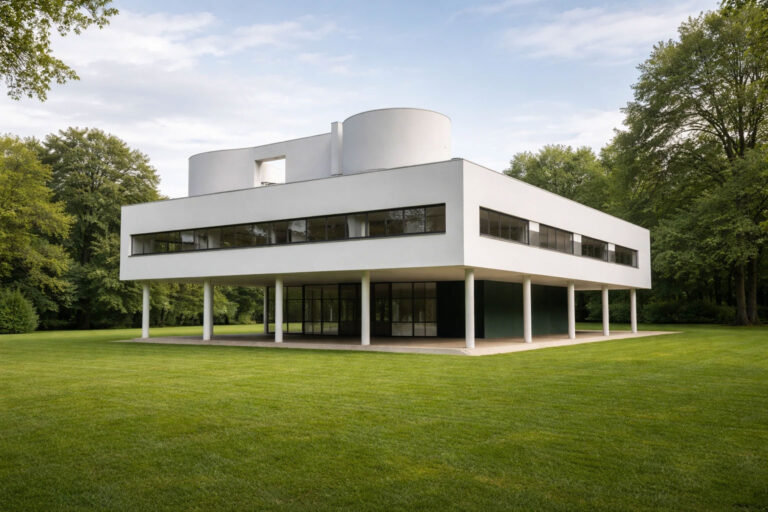
Villa Savoye, designed by Le Corbusier between 1928 and 1931 in Poissy, France, is one of the most influential works in the history of modern architecture. More than a private house, it stands as a built manifesto that redefined architectural thinking in the 20th century.
1. Villa Savoye in the History of Architecture
This iconic project perfectly embodies Le Corbusier’s Five Points of Architecture:
- Pilotis – elevating the building above ground
- Free Plan – flexible interior layout
- Free Facade – independence of structure and skin
- Ribbon Windows – continuous horizontal glazing
- Roof Garden – reclaiming green space
These principles became the foundation of modern architectural design worldwide.
2. Spatial and Architectural Analysis
Villa Savoye represents Le Corbusier’s idea of the house as a “machine for living.”
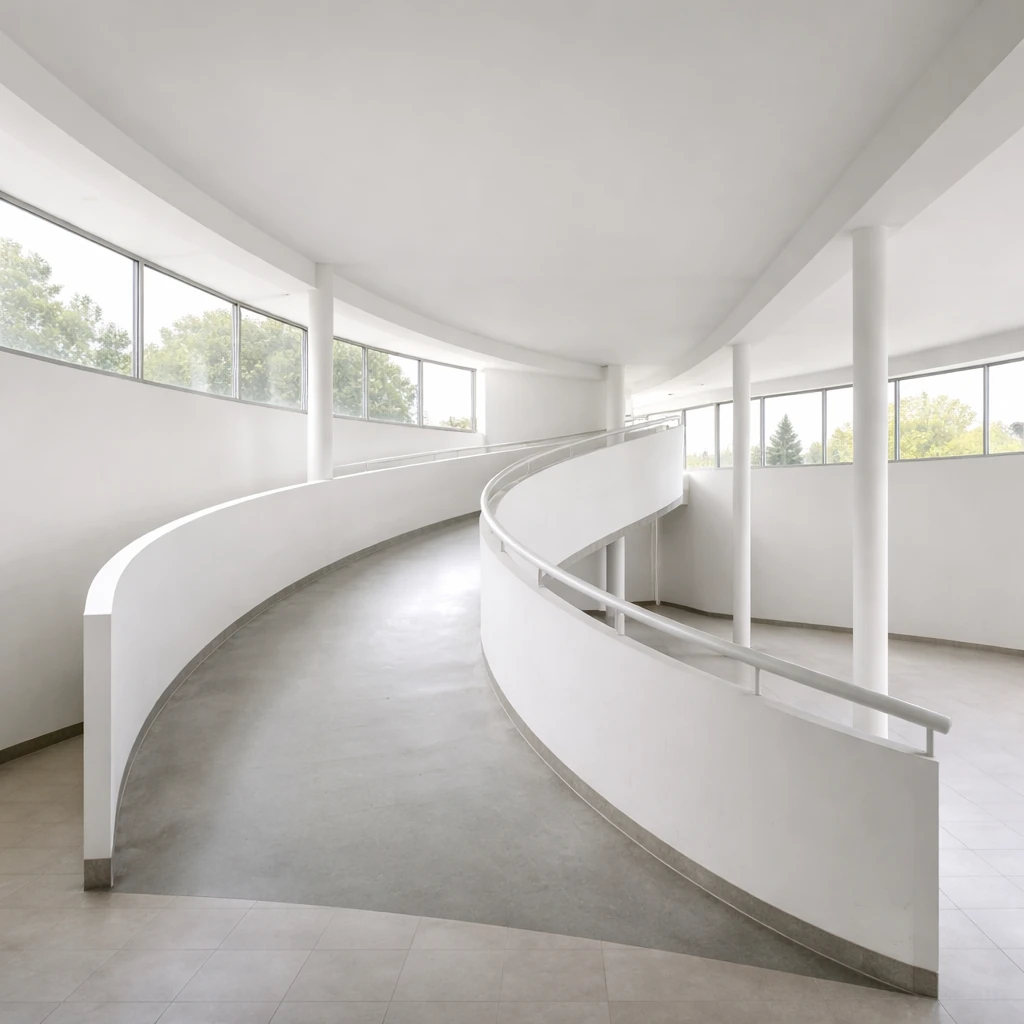
Its pure white volume, horizontal emphasis, and fluid internal ramp create a continuous spatial experience driven by light, movement, and proportion.
- Ground floor: openness and circulation
- Main floor: living spaces with panoramic views
- Roof: a sculptural garden blending architecture and nature
Here, architecture becomes an experience rather than an object.
3. Influence on Contemporary Architecture
Villa Savoye has inspired generations of architects and remains a key reference for modern villas and minimalist residential architecture. It demonstrates how rational design can coexist with poetic spatial expression.
Conclusion | Riboo Architecture Studio Perspective
At Riboo Architecture Studio, we view Villa Savoye as more than a historical icon—it is a timeless architectural lesson in concept clarity, functional beauty, and innovation.
Our design philosophy is rooted in these values:
contemporary architecture, thoughtful space-making, and harmony between form and life.
If you are seeking architectural design that balances theory, creativity, and real-life functionality, Riboo is your architectural partner.
No comments yet.